
How to Inspect a Tactical Backpack Before Bulk Ordering: A 9-Point Quality Checklist
A tactical backpack may look durable in product photos, but appearance alone cannot show how it will perform under real carrying conditions.
For importers, distributors, outdoor brands and project buyers, common problems include loose shoulder straps, difficult zippers, uneven MOLLE webbing, weak buckles and differences between approved samples and bulk production.
A clear inspection process before mass production and shipment can help reduce these risks. Here are nine important areas buyers should check before placing a bulk tactical backpack order.
1. Confirm the Fabric Specification
Descriptions such as “600D Oxford fabric” or “1000D nylon” do not provide enough information to evaluate a backpack’s material quality.
Denier describes the density of the yarn, but it does not independently determine the finished fabric’s strength, weight, coating or durability.
Before confirming an order, buyers should check:
- Fiber composition
- Fabric denier and weight
- Weave construction
- Back coating
- Water-repellent treatment
- Color and surface texture
- Abrasion and tear-resistance requirements
The approved material specification should be recorded in the quotation, product specification sheet or bill of materials.
This helps prevent the bulk production from using a fabric that has a similar name but performs differently from the approved sample.
2. Inspect Stitching at High-Stress Areas
Backpack failures usually begin at areas where pressure is concentrated rather than in the middle of a large fabric panel.
Important inspection points include:
- Shoulder-strap attachment points
- Top carrying handle
- Waist-belt connections
- Compression-strap anchors
- MOLLE webbing ends
- Bottom corners
- Zipper ends
These areas may require reinforced stitching, box stitching or bar tacks, depending on the design.
Buyers should also check for skipped stitches, loose threads, broken threads, uneven stitch length and fabric wrinkles around the seams.
For customized orders, the sample should be tested with a realistic load before mass production begins.
3. Check MOLLE Alignment and Compatibility
A MOLLE attachment system is only useful when the webbing or laser-cut openings are correctly positioned and compatible with the intended accessories.
Check whether:
- The rows are straight
- Spacing is consistent
- Stitching sections are equal
- Webbing ends are secure
- Laser-cut openings are clean
- The panel remains stable after accessories are attached
Visual inspection alone may not be enough.
Attach several commonly used pouches to the sample and confirm that they can be installed smoothly and remain secure during movement.
The approved sample should clearly show the MOLLE construction required for the final order.
4. Test Every Zipper
A zipper may work smoothly when the backpack is empty but become difficult to operate after the compartments are fully loaded.
Open and close every zipper several times and check:
- Smooth movement around corners
- Zipper-chain alignment
- Slider stability
- Pull-tab attachment
- Fabric catching near the zipper
- Reinforcement at both ends
- Ease of use while wearing gloves
The zipper brand is only one part of the evaluation.
Zipper size, installation method, seam construction and compartment shape can all affect the final performance of the backpack.
Buyers should therefore inspect the complete zipper system on the finished sample.
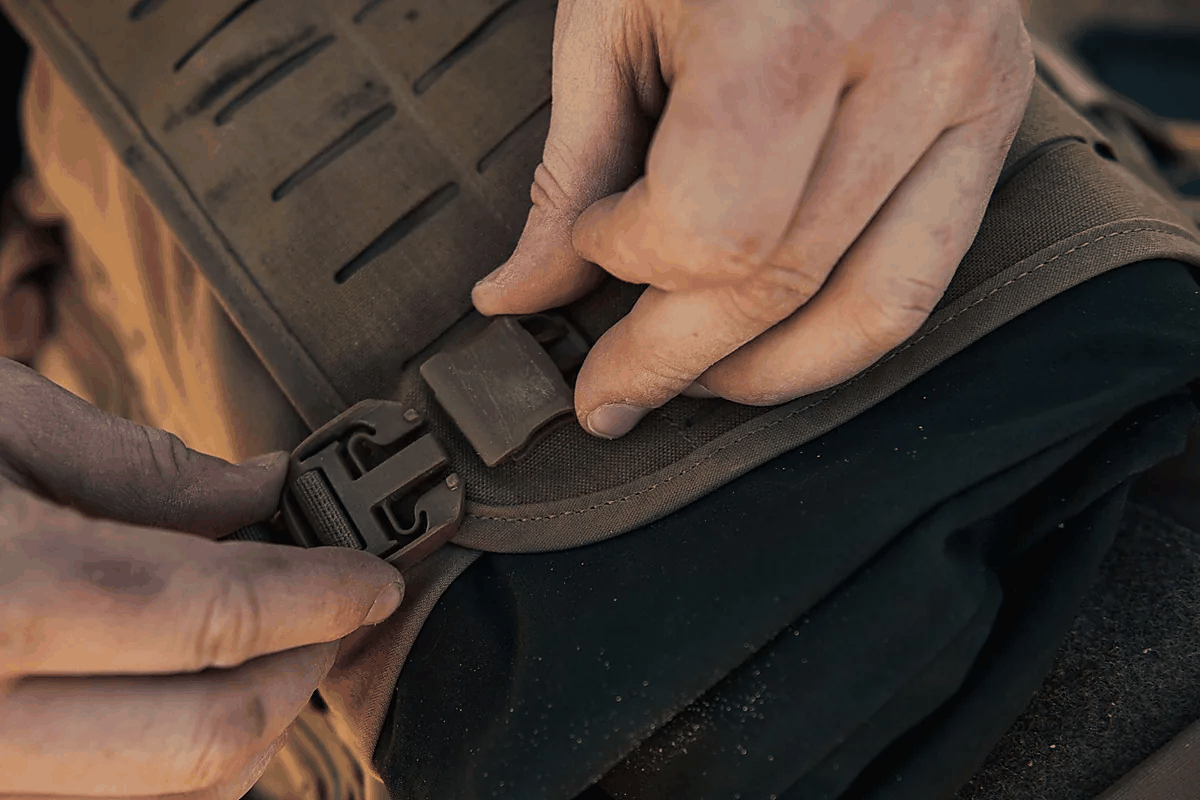
5. Inspect Buckles and Adjustment Hardware
Tactical backpacks often include side-release buckles, ladder locks, cord adjusters and other plastic or metal components.
Each part should be operated several times.
Check whether:
- The buckle closes securely
- It opens without excessive force
- It is unlikely to release accidentally
- The webbing remains in position after adjustment
- The hardware size matches the webbing width
- There are no cracks, sharp edges or visible defects
- The component remains functional under the expected load
Buckles that look similar may have different levels of strength and durability.
The selected hardware should match the backpack’s intended application, carrying weight and target market.
6. Evaluate the Shoulder Straps and Carrying System
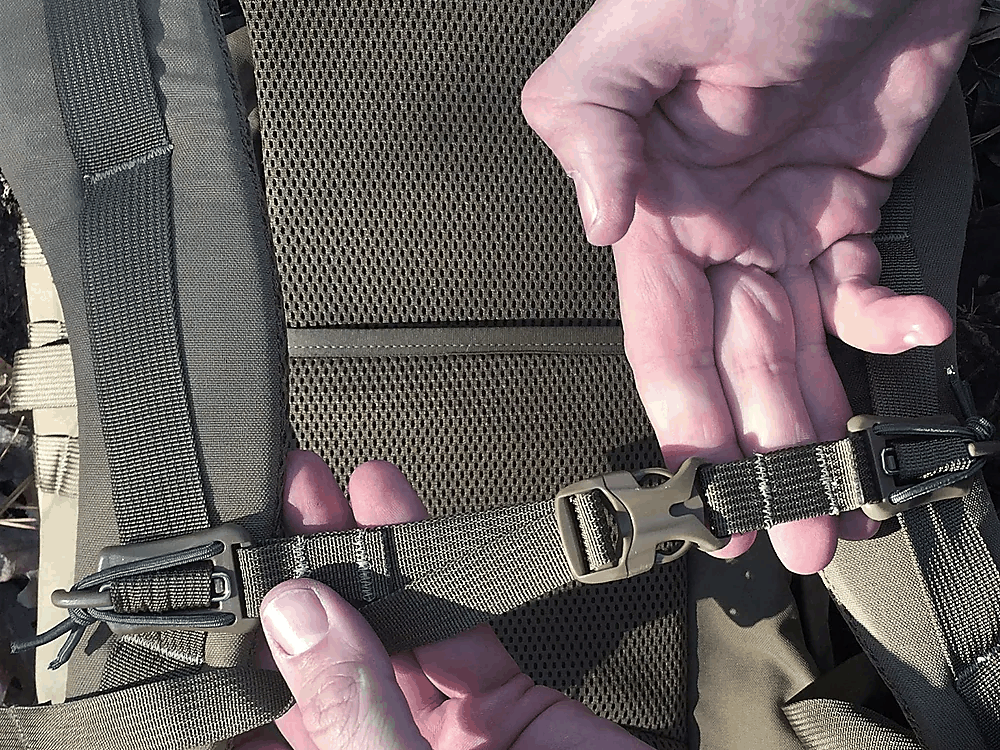
Strong fabric does not guarantee a comfortable backpack. The carrying system must also distribute weight properly.
Fill the sample with a realistic load and evaluate:
- Shoulder-strap width
- Padding thickness and density
- Strap spacing
- Sternum-strap position
- Waist-strap adjustment range
- Back-panel ventilation
- Load balance
- Pressure on the shoulders and lower back
A compact daily backpack may only require a simple padded back panel. A larger outdoor backpack normally needs better load distribution, compression straps and additional adjustment points.
As a practical reference, buyers can review KANGO’s large-capacity tactical backpack with MOLLE webbing and an adjustable carrying system.
The design includes padded shoulder straps and a padded back panel, adjustable chest and waist straps, side compression straps, multiple compartments and MOLLE attachment areas.
However, product descriptions should not replace actual testing. Buyers should still evaluate the sample using the expected load and usage conditions of their target market.
7. Clarify Water-Resistance Requirements
“Waterproof” and “water-resistant” should not be treated as the same claim.
A coated outer fabric may resist light rain, but water can still enter through:
- Needle holes
- Zippers
- Unsealed seams
- Main openings
- Hydration-tube ports
- Bottom-panel connections
Before confirming an order, buyers should define the actual requirement.
Does the backpack need to resist light rain, heavy rain, splashing water or temporary immersion?
A general outdoor backpack may only require a water-spray test. A product designed for harsher environments may require coated materials, covered zippers, seam sealing or an internal waterproof liner.
The final product claim should be based on the complete backpack structure, not only the outer fabric.
8. Create an Approved Golden Sample
A final approved reference sample, often called a golden sample, is one of the most effective ways to reduce differences between samples and bulk production.
The golden sample should confirm:
- Fabric and color
- Product dimensions
- Logo size and position
- Zippers and buckles
- Webbing and MOLLE structure
- Stitching
- Pocket layout
- Product labels
- Packaging method
Sample approval should include written comments.
Instead of simply writing “approved,” buyers should record which details are accepted and which points must be corrected during production.
Whenever possible, both the buyer and supplier should retain an approved sample for final comparison.
9. Inspect Packaging and Carton Information
Quality inspection should not stop when the backpack is completed.
Incorrect packaging may cause deformation, moisture problems, missing accessories or shipping errors.
Check:
- Individual packaging
- Backpack folding method
- Included accessories
- Product labels and barcodes
- Quantity per carton
- Carton dimensions
- Shipping marks
- Moisture protection
Large backpacks can occupy significant shipping space, but excessive compression may deform shoulder padding, back panels or reinforced components.
The packaging method should balance product protection with reasonable shipping volume.
A Simple Pre-Shipment Inspection Process
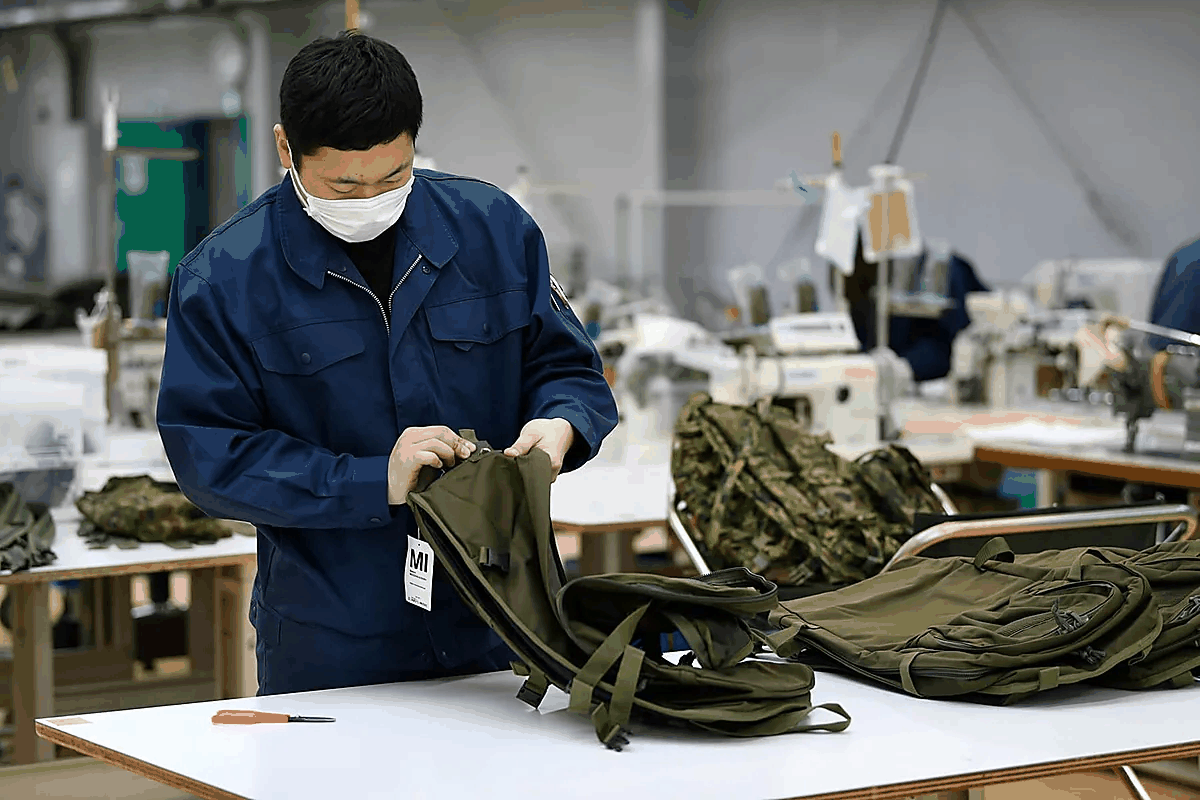
Before shipment, finished products should be selected randomly from different cartons.
The inspection should include:
- Quantity verification
- Visual workmanship inspection
- Dimension measurement
- Color and logo comparison
- Zipper and buckle testing
- MOLLE and pocket inspection
- Practical load testing
- Packaging verification
Inspection requirements and acceptable defect levels should be confirmed before production begins.
The final inspection report should include product photos, measurements and functional test results.
What Information Should Buyers Provide?
To receive an accurate quotation and product recommendation, buyers should provide:
- Intended application
- Required capacity
- Expected carrying load
- Preferred fabric
- Product color
- Logo artwork
- MOLLE and pocket requirements
- Estimated order quantity
- Packaging requirements
- Destination market
- Required delivery date
Clear product specifications help suppliers select suitable materials, hardware and manufacturing methods while reducing quotation differences.
Conclusion
Tactical backpack quality cannot be judged by appearance, capacity or fabric denier alone.
Reliable performance depends on the complete combination of material specifications, reinforced stitching, MOLLE construction, zippers, buckles, carrying comfort, packaging and production control.
By checking these nine areas and retaining an approved reference sample, buyers can reduce quality disputes and source backpacks that better match their market requirements.
KANGO provides tactical backpacks, outdoor bags and customized carrying solutions for distributors, brands and project buyers.
Contact our team with your required capacity, materials, order quantity and customization details to discuss a suitable backpack solution.
Post time: Jul-17-2026