
A Practical Netting System for Demanding Outdoor Projects
IRR camouflage netting combines a three dimensional leaf cut surface with a supporting rope mesh and reinforced fixing points. The construction provides lightweight visual coverage while maintaining airflow and flexible installation. For projects with additional technical requirements, the netting can be configured with IRR treatment, thermal infrared reduction, flame retardant treatment, UV resistance, water resistance, rot resistance and mould resistance.
The main conclusion is straightforward. Buyers do not need to choose between visual coverage and practical handling. By defining the environment, required dimensions, edge structure and performance standards before production, one netting system can be adapted for outdoor shade, privacy screening, temporary shelters, observation structures, vehicle and equipment covering, events, gardens and other project based applications.
Core Product Advantages
• Irregular leaf cut surface for three dimensional visual disruption
• Lightweight structure that can be folded or rolled for transport
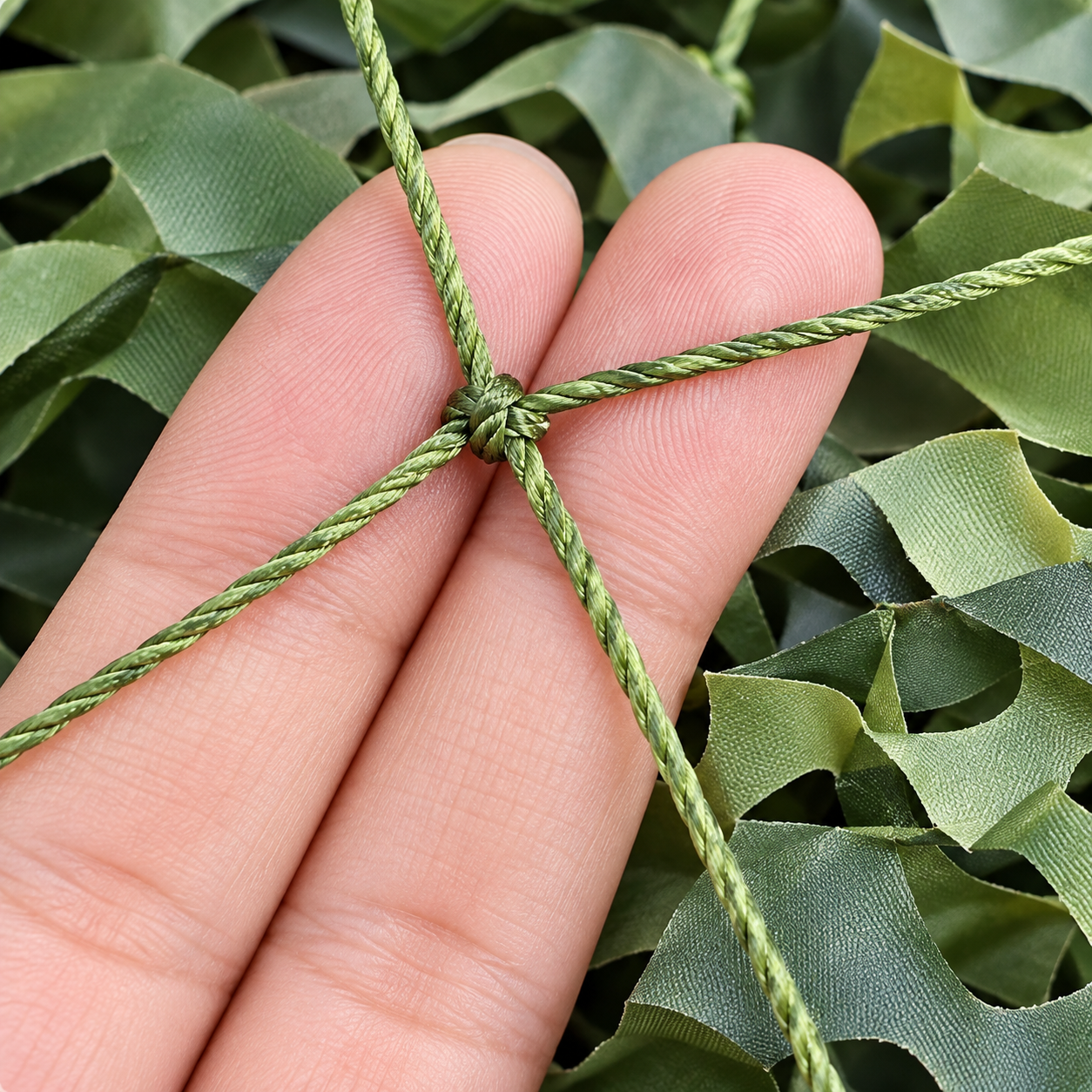
• Supporting nylon rope mesh for flexible positioning and connection
• Reinforced perimeter binding and practical fixing loops
• Quick drying water resistant rot resistant and mould resistant options
• Low glare treatment to reduce unwanted surface shine
• Available IRR thermal infrared flame retardant and UV resistant configurations
• Custom colors patterns dimensions fixing points labels and packaging
The exact specification should be matched to the intended application. Color and dimensions can be selected first, while advanced performance requirements should be supported by an agreed test method and confirmed before mass production.
View product details and current configuration options KANGO IRR Camouflage Netting
Why Leaf Cut Netting Works
A solid sheet can block the view, but it can also trap heat, catch more wind and create an unnatural flat surface. Standard mesh improves airflow, yet its regular grid may remain easy to recognize against trees, vegetation or uneven outdoor backgrounds. Leaf cut netting provides a more balanced structure.
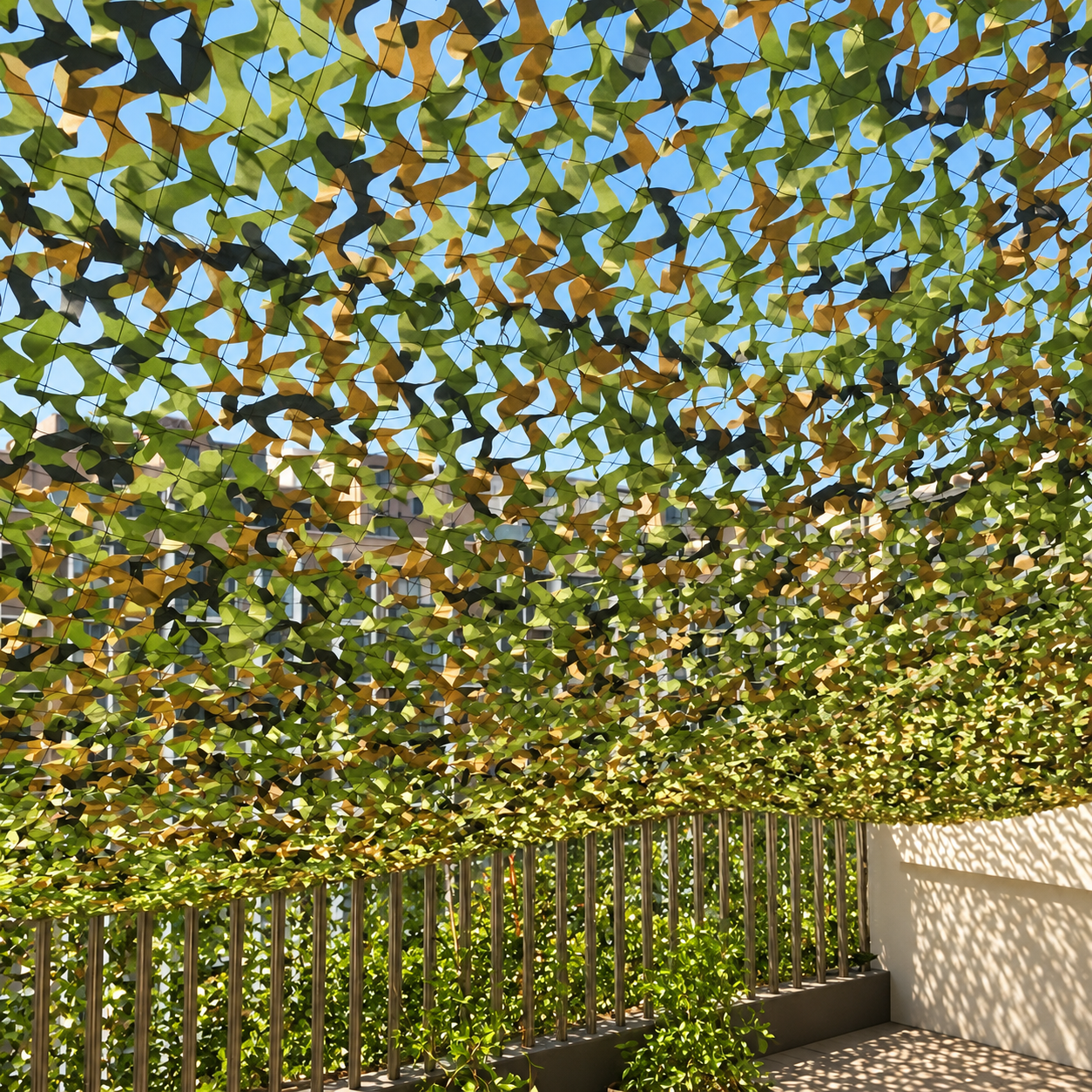
The irregular cutouts break up the outline of the covered object. Overlapping leaves create depth, while light passes through the openings at changing angles. The surface therefore produces a less uniform combination of color, light and shadow than ordinary screening material.
 |
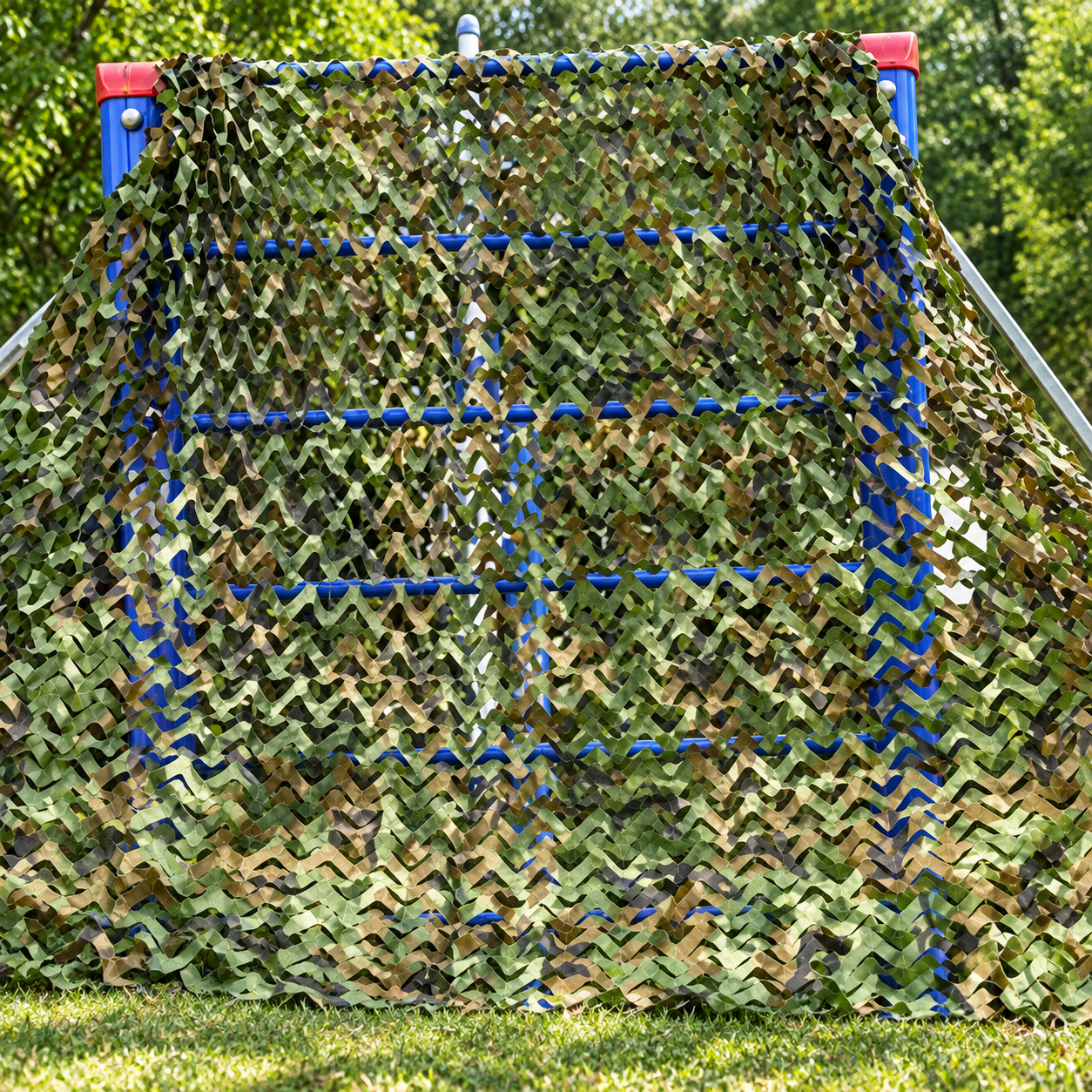 |
The same net can be suspended above a space, attached vertically to a frame or draped over an irregular object. This flexibility allows the material to provide coverage without completely enclosing the area. Air can continue to move through the openings, and the net can be repositioned when the project layout changes.
Matching the Netting to the Environment
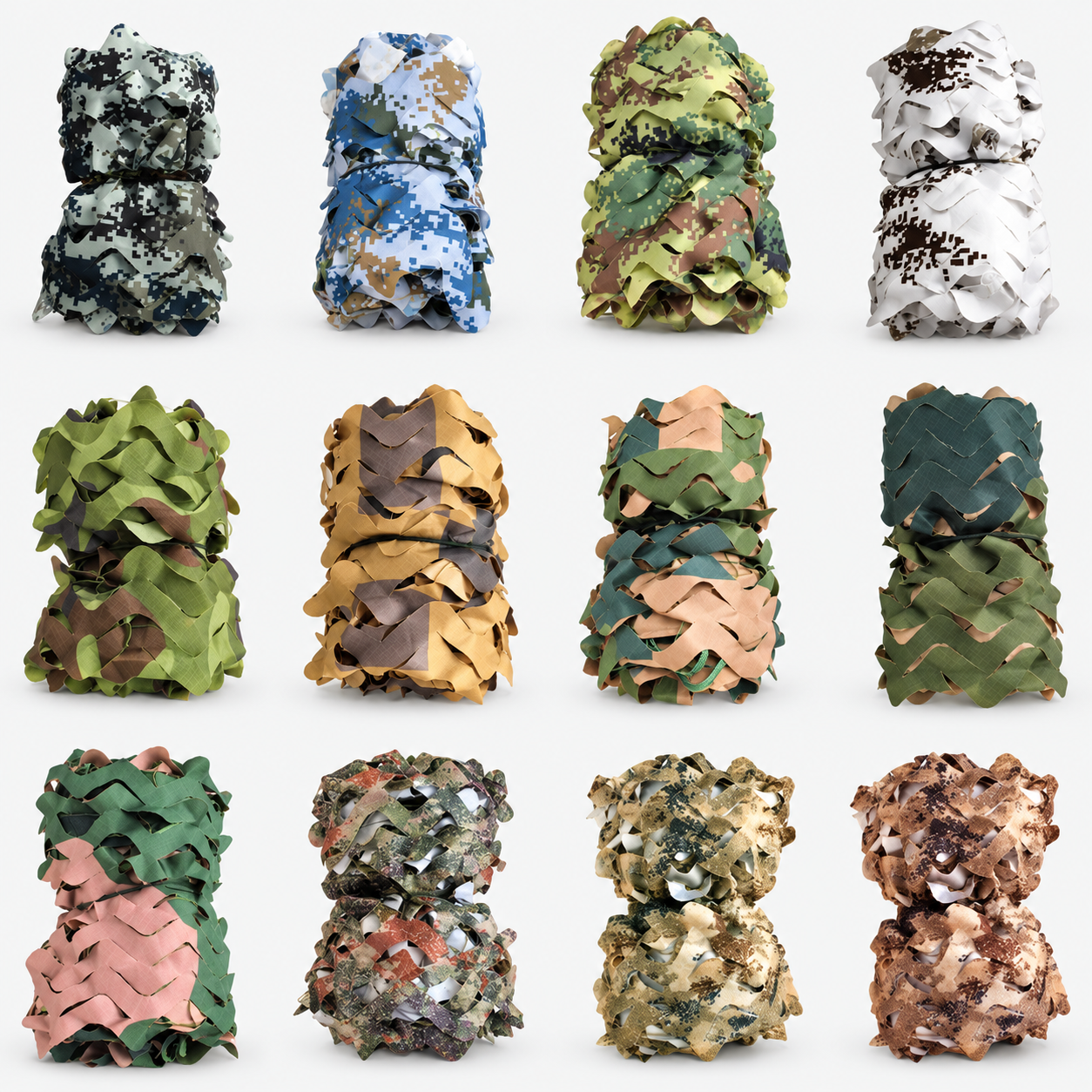
Color selection should be based on the intended background, seasonal conditions and expected viewing distance. A dark woodland pattern may work well against dense vegetation, while lighter green and tan combinations are more suitable for mixed grassland, dry terrain or transitional environments. White options can support winter backgrounds and decorative projects.
 |
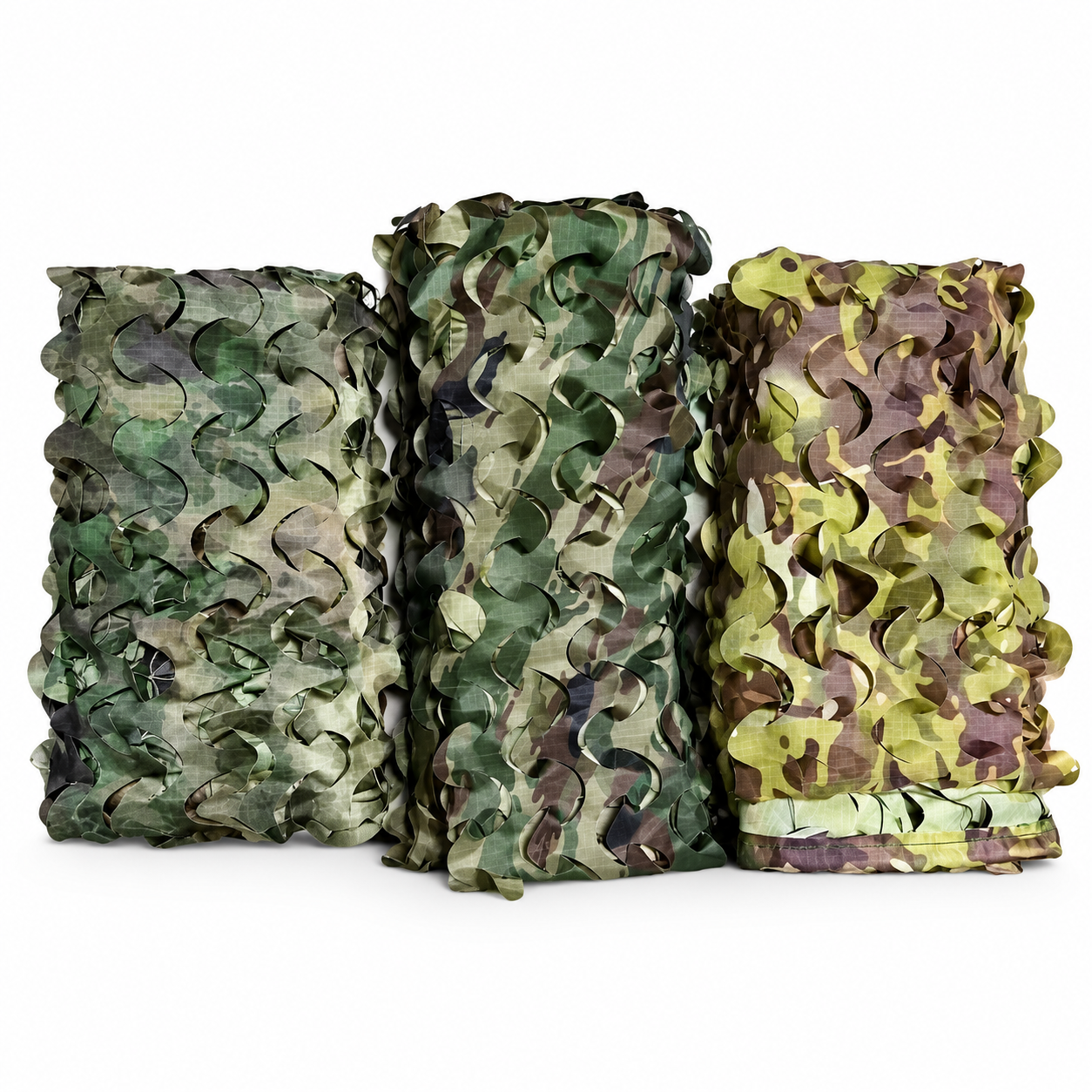 |
For distributors, customized pattern and color development can help create a distinct product range. Buyers may choose from existing woodland, green, desert, white and digital style options or request a custom combination. The selected colors should be evaluated together with the low glare treatment because excessive surface shine can reduce the value of an otherwise suitable pattern.
Recommended selection process Review the installation environment first, confirm the dominant and secondary colors, then select the leaf density, surface finish and backing mesh. This creates a more coherent result than choosing color alone.
Reinforced Panel Design for Repeated Installation
A practical camouflage net must remain manageable during transport and dependable during installation. A typical configuration combines a 210D Oxford fabric leaf cut surface with a nylon rope mesh backing. The rope grid supports the patterned layer and distributes tension across the panel instead of concentrating force in one area.
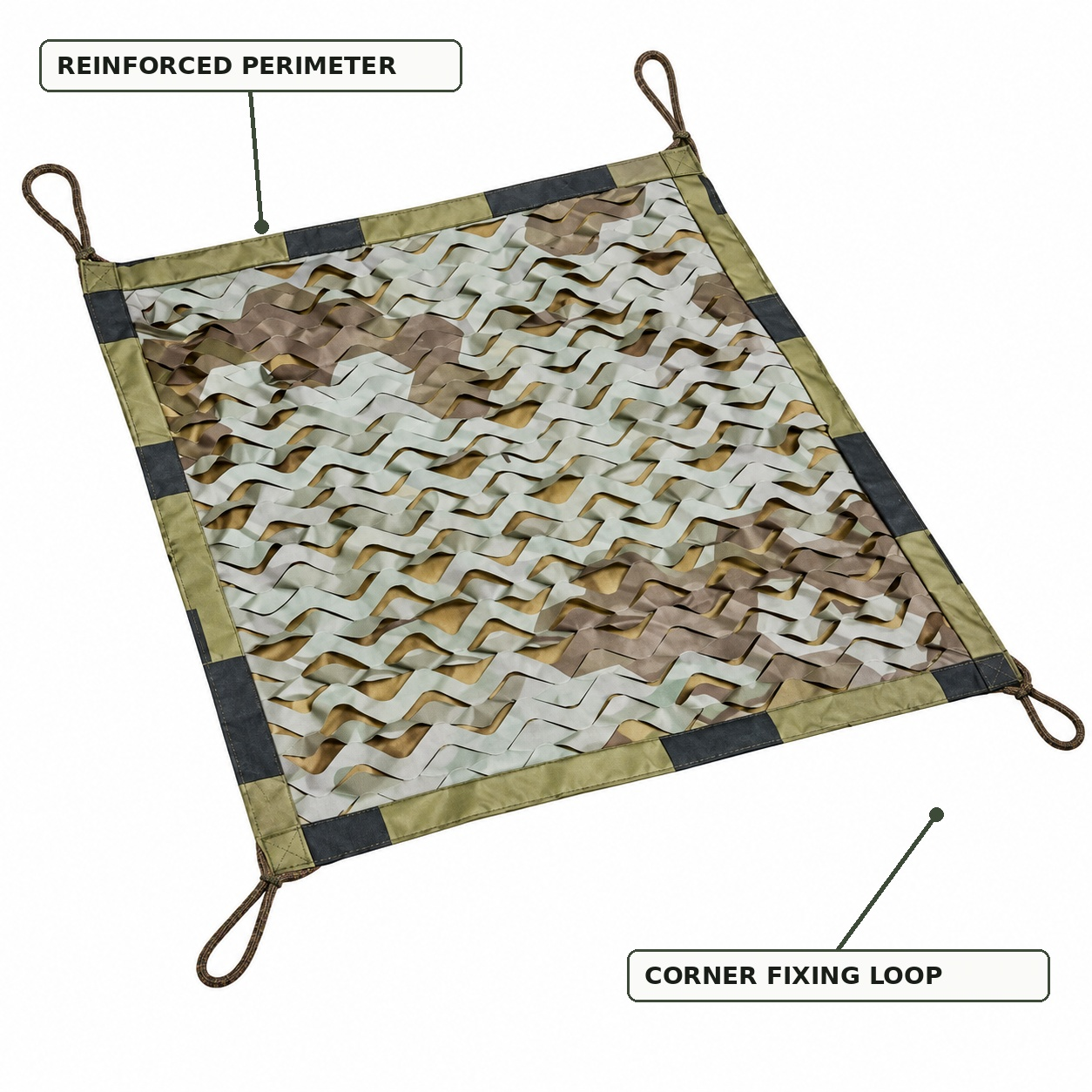
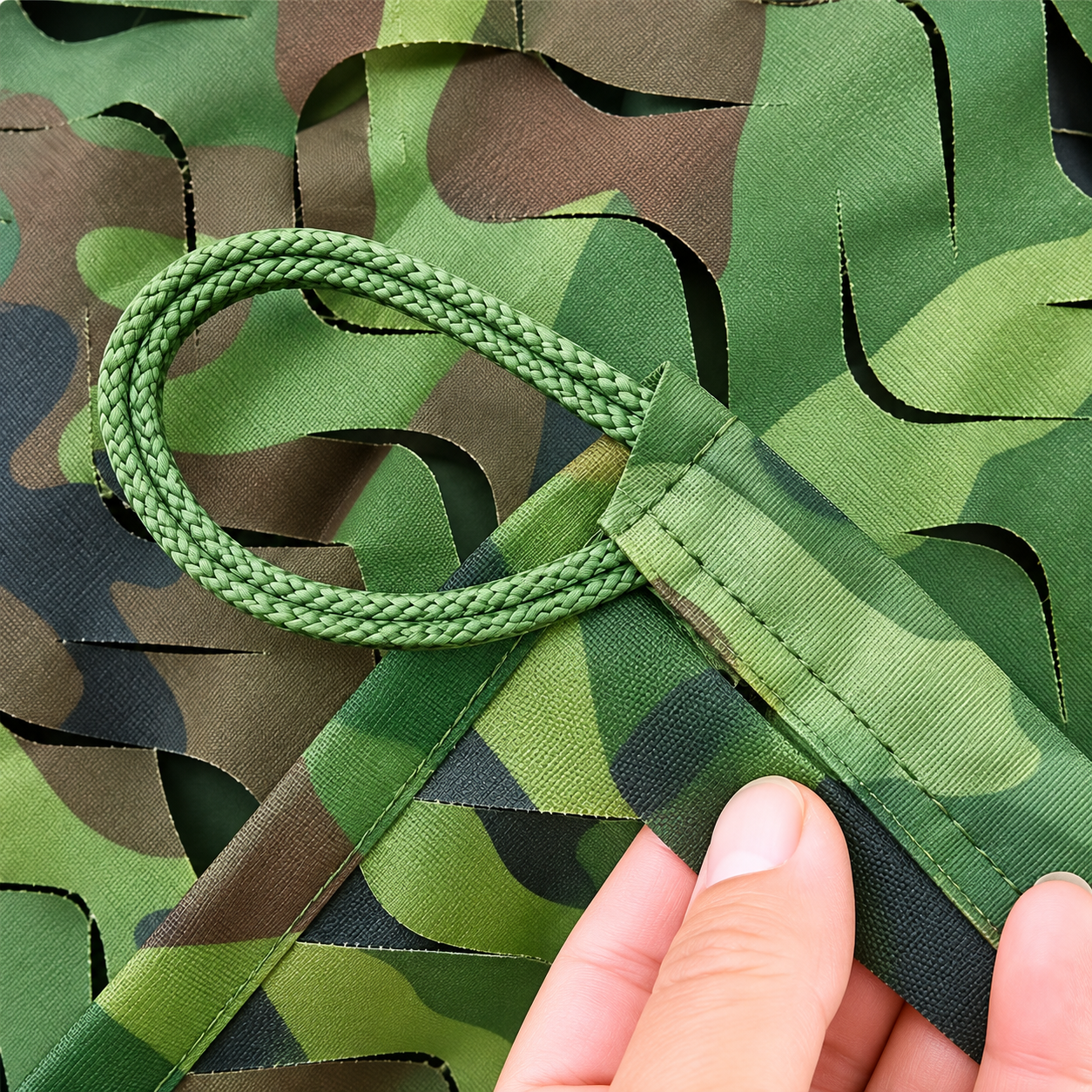
Reinforced binding helps maintain the perimeter and creates a stronger base for the fixing loops. Depending on the project, loops can be positioned at the corners, placed along the edges or combined with drawstring connections. The finished net can then be attached to hooks, ropes, poles, fences, railings or temporary frames without puncturing unsupported fabric.
For larger installations, multiple panels can be connected. The layout should allow enough extra material for draping, tension adjustment and secure fixing. Custom loop spacing is useful when the buyer already knows the frame dimensions or connection points.
CONSTRUCTION DETAILS
Fixing Points and Supporting Mesh
The details below show how the edge structure and supporting grid contribute to the finished product. These components are important for frequent installation, irregular coverage and repeated folding or rolling.
 |
 |
Installation Benefits
Multiple mesh intersections provide flexible connection points and make it easier to shape the net around uneven objects. The installer can control the position and tension without relying only on the corners. When a defined frame is used, the reinforced loops provide faster attachment and a cleaner finished edge.
• Suspend the net over an outdoor sitting or work area
• Attach the panel to a fence railing or temporary frame
• Drape the material over equipment and storage items
• Connect several panels to cover a larger area
• Remove fold or roll the net when the installation changes
OUTDOOR PERFORMANCE
Water Resistance and Weather Performance
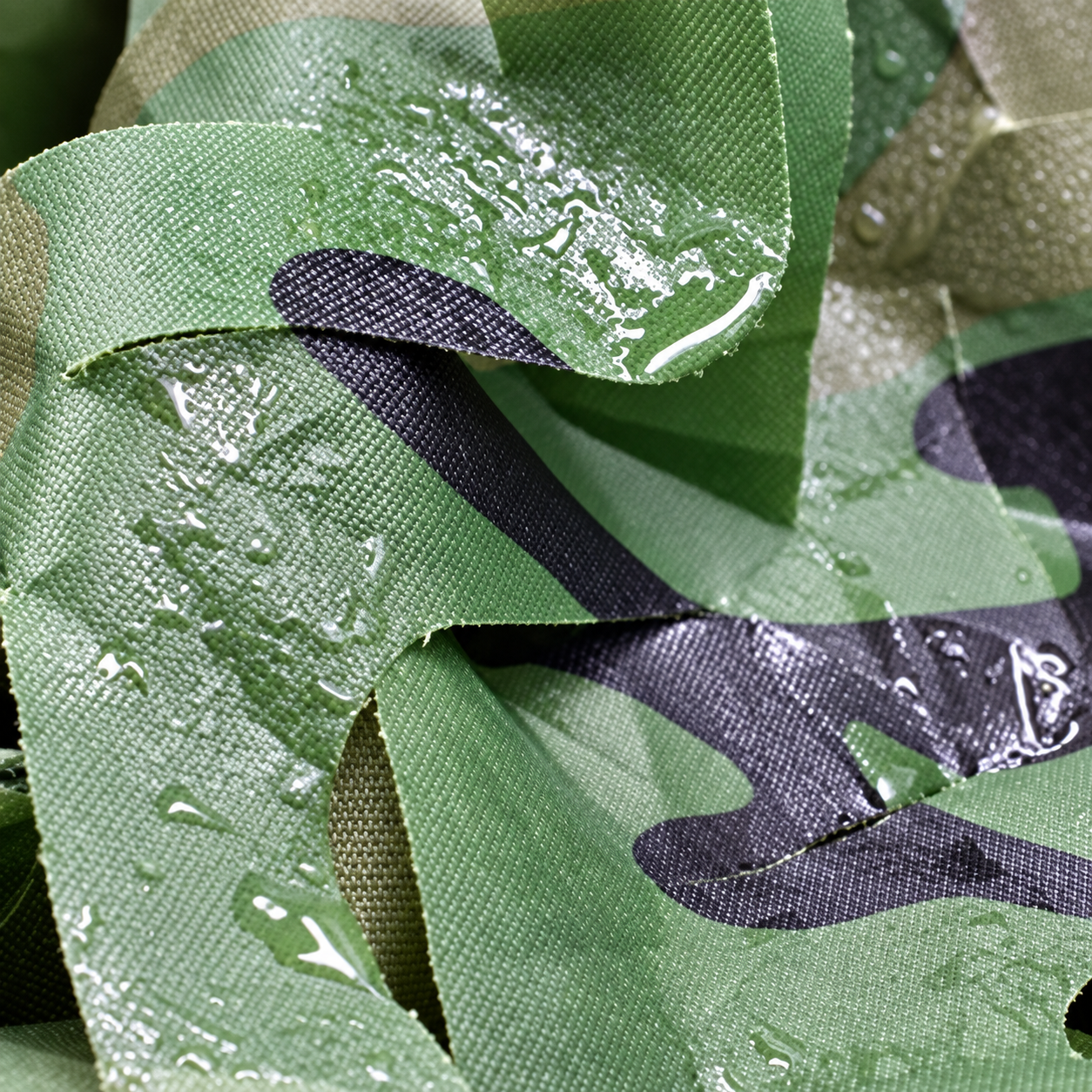
Outdoor netting encounters rain, dew, humidity, dust and changing temperatures. A water resistant surface treatment helps water form droplets instead of being immediately absorbed. Combined with the open leaf cut structure, the material can release moisture and dry more quickly than a heavy solid covering.
 |
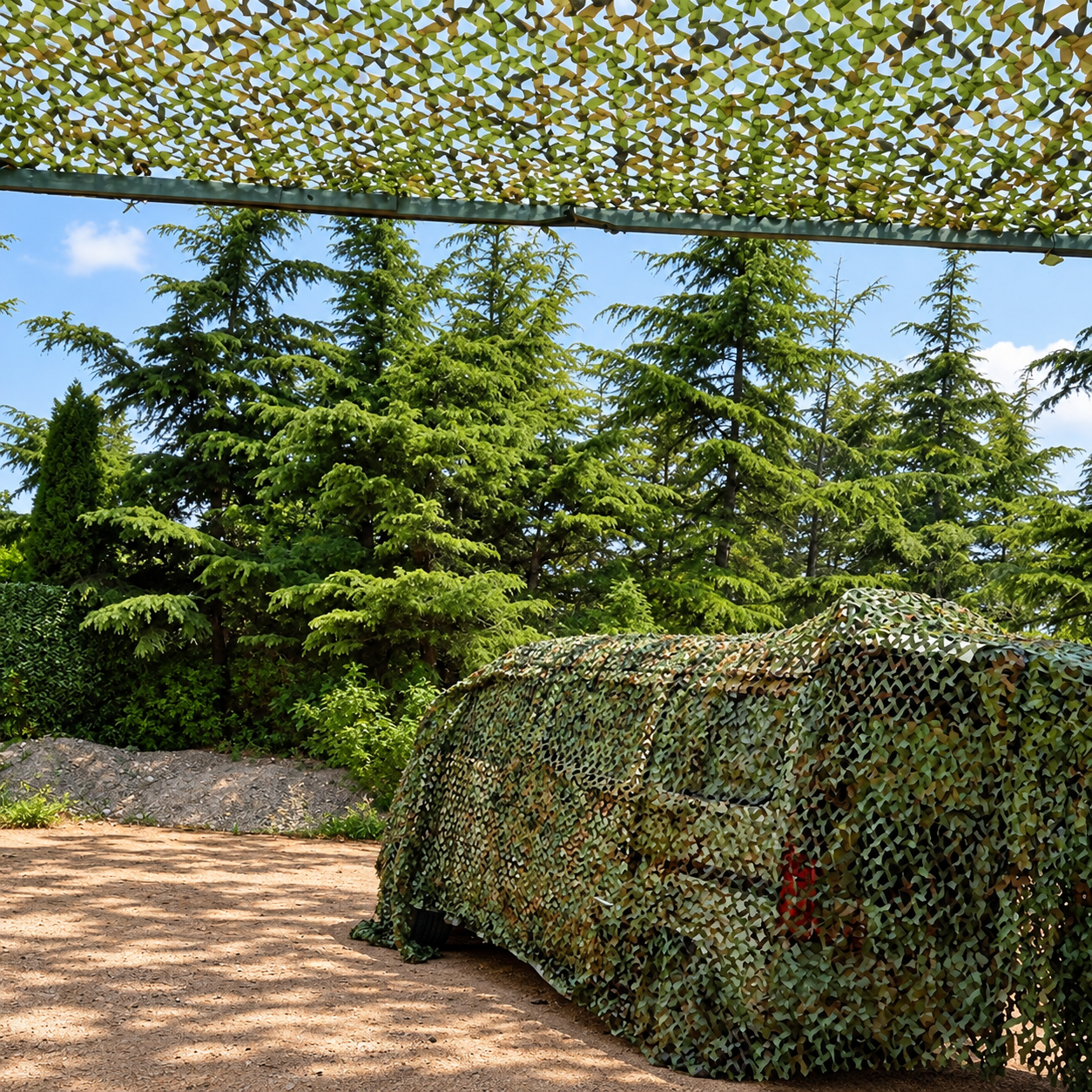 |
Available outdoor performance options include water resistance, quick drying construction, resistance to rot and mould, reduced surface shine and UV resistant treatment. These properties support longer outdoor use and more convenient handling, but the net should still be inspected, cleaned and dried before long term storage.
Water resistant does not mean fully waterproof. The material contains intentional openings for airflow and visual disruption. Its purpose is to provide shade and coverage while maintaining ventilation, rather than forming a sealed roof.
ADVANCED PERFORMANCE
IRR and Thermal Infrared Reduction
Visual camouflage and infrared management are related but separate functions. A color pattern may blend with vegetation when viewed by the human eye while responding differently under infrared observation. For projects that require broader spectral performance, the netting can be configured with IRR treatment to manage infrared reflectance according to the agreed requirement.
Thermal infrared reduction is another available performance direction. Its effectiveness depends on material composition, surface treatment, the distance between the net and the covered object, airflow, ambient temperature, installation method and the specified test conditions. The product should therefore be described as a configurable reduction solution rather than as creating complete infrared or thermal invisibility.
Flame Retardant and UV Resistant Options
Flame retardant treatment can be added when the project requires slower ignition or flame spread under a specified test method. Flame retardant does not mean fireproof, and the material should still be kept away from open flames and uncontrolled heat sources. Buyers should provide the required standard so the correct material version can be sampled and evaluated.
UV resistant treatment is intended to improve durability during sunlight exposure and help reduce premature fading or material degradation. Expected service life will still depend on climate, installation tension, sunlight intensity, maintenance and frequency of use.
|
Performance Area |
What It Supports |
Order Confirmation |
|
IRR |
Manages infrared reflectance for a defined project requirement | Confirm spectral range target values and test method |
|
Thermal Infrared |
Helps reduce or manage thermal contrast in selected configurations | Confirm construction environment and evaluation conditions |
|
Flame Retardant |
Supports slower ignition or flame spread under the selected standard | Confirm required standard and report scope |
|
UV Resistance |
Supports outdoor durability and color retention during sunlight exposure | Confirm expected use period and environment |
APPLICATION PLANNING
Flexible Coverage for Multiple Outdoor Uses
One of the strongest advantages of leaf cut netting is its adaptability. The same basic structure can be suspended overhead for filtered shade, installed vertically for privacy or draped over objects for visual coverage. The open construction reduces the solid wall effect and allows the material to follow irregular shapes.
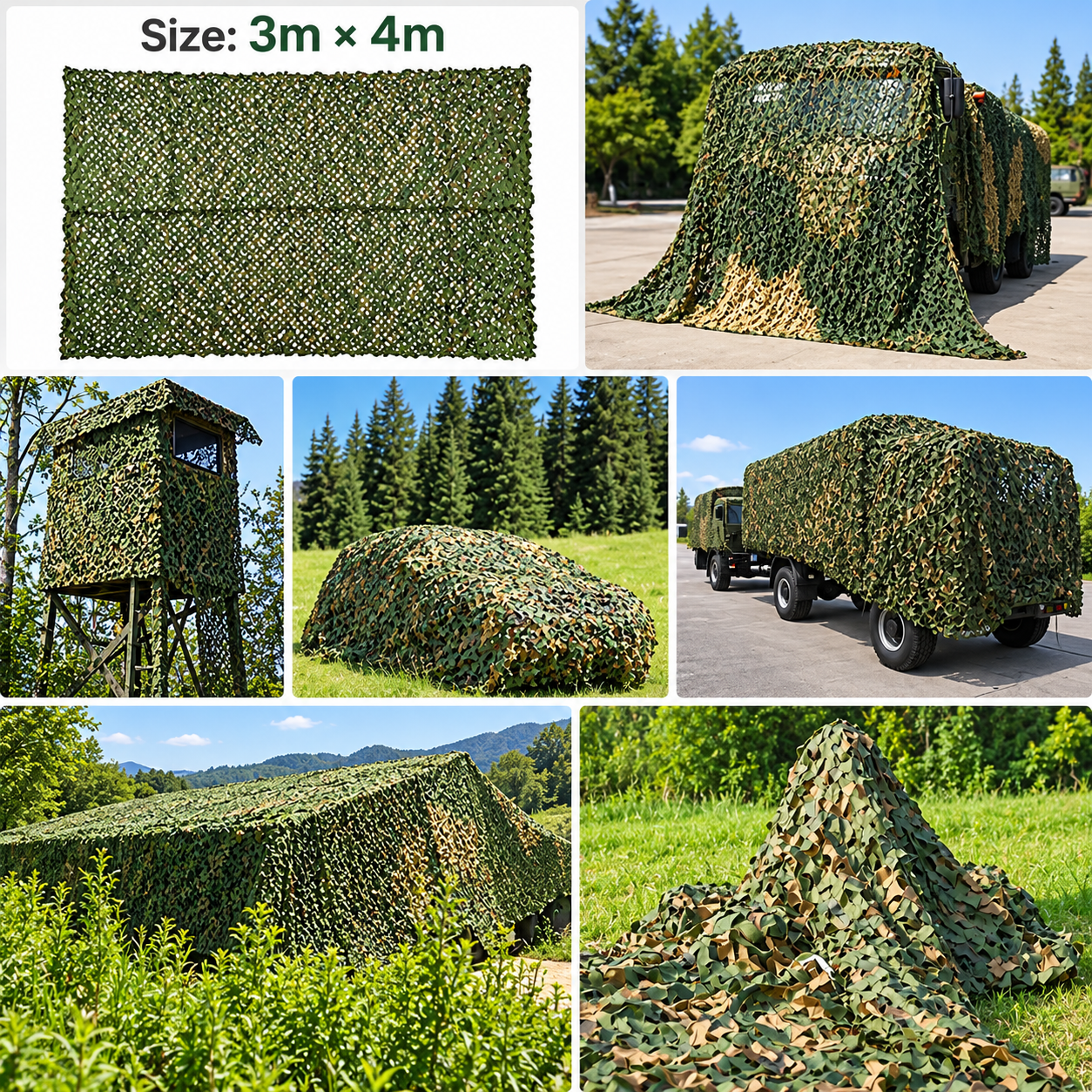
The 3 m by 4 m size shown above is one practical option for general coverage. Custom dimensions are also available. A finished cover should normally be larger than the direct top view of the object because additional material is required for the sides, fixing points and natural drape.
CUSTOMIZATION
Color Size and Packaging Options
The netting can be configured for different markets and projects through changes to color, pattern, dimensions, edge structure, fixing points and packaging. Green and woodland combinations are common for outdoor vegetation, while tan and dry terrain colors suit lighter backgrounds. White netting provides another option for winter environments, stage design, photography, events and decorative applications.
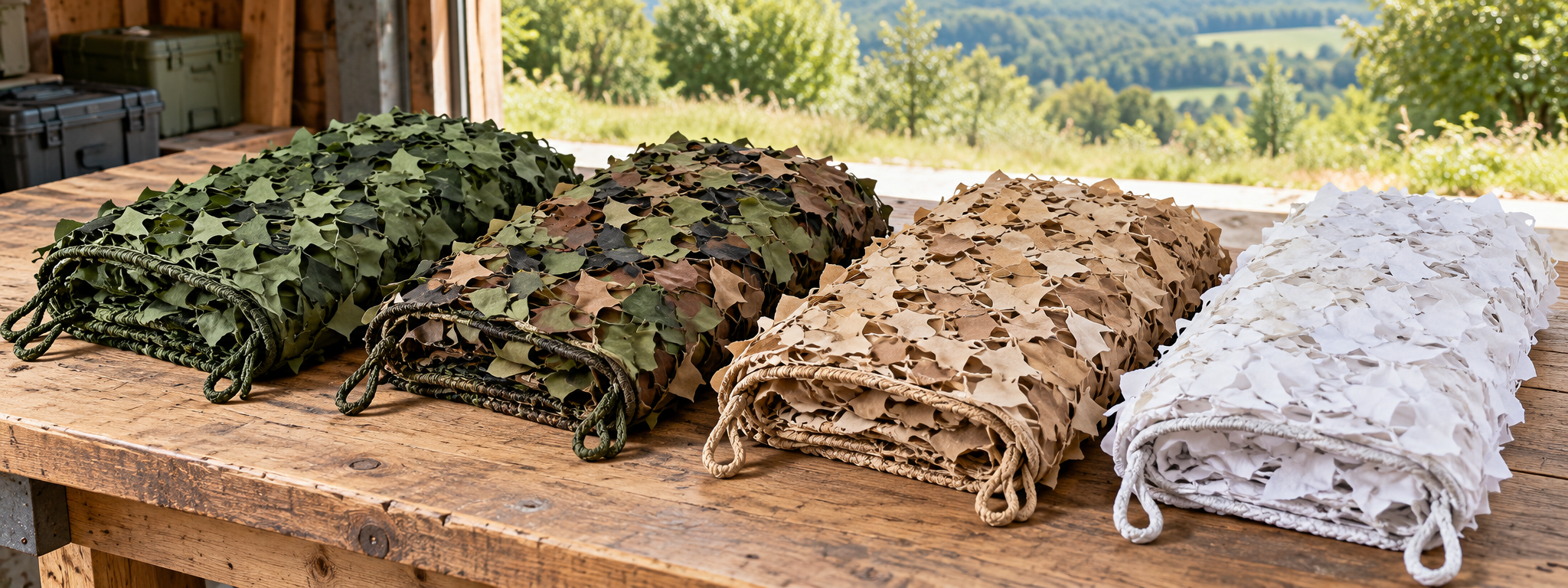
Packaging can be folded, rolled or compressed according to the size and shipping requirement. Custom labels, barcodes, printed inserts and private label packaging can be prepared for distributors. The packaging method should be confirmed together with carton dimensions and quantity per carton.
TECHNICAL SUMMARY
Customizable Product Specifications
The following table summarizes the available construction and customization directions. Final values should be confirmed on the quotation, sample approval and production specification.
|
Specification |
Available Configuration |
| Product Name | IRR Camouflage Netting |
| Main Construction | 210D Oxford fabric leaf cut surface with nylon rope mesh backing |
| Pattern | Leaf cut woodland green desert white digital style or custom |
| Color | Green woodland tan desert white or custom combination |
| Size | Standard panels or custom dimensions |
| Edge | Reinforced perimeter binding |
| Fixing | Corner loops edge loops tie loops or drawstring options |
| Surface | Low glare or reduced shine treatment |
| Weather Options | Water resistant quick drying rot resistant mould resistant and UV resistant |
| Advanced Options | IRR thermal infrared reduction and flame retardant treatment |
| Applications | Shade privacy shelter observation equipment coverage vehicle coverage events and gardens |
| Branding | Custom labels printed inserts barcode labels and private label packaging |
| Packaging | Folded rolled compressed polybag or carton packing |
ORDER PREPARATION
Information to Confirm Before Ordering
A clear specification makes sampling, quotation and production confirmation more efficient. Buyers should provide the following information whenever possible.
1. Required width length and estimated order quantity
2. Preferred color pattern and leaf density
3. Intended application and installation environment
4. Expected indoor or outdoor use period
5. Required edge reinforcement and fixing point positions
6. Folded rolled or customized packaging method
7. Private label barcode or printed insert requirements
8. IRR and thermal infrared reduction requirements
9. Flame retardant standard and UV resistance requirement
10. Required test method inspection criteria and destination market
Post time: Sep-29-2026