
Short, light and built for movement, silkies shorts have moved beyond their old “ranger panties” reputation. Today they are used for running, gym work, hot-weather training, hiking and casual outdoor wear—and they are becoming a flexible platform for private-label programs.
Why a Minimal Short Still Has a Place in Modern Training
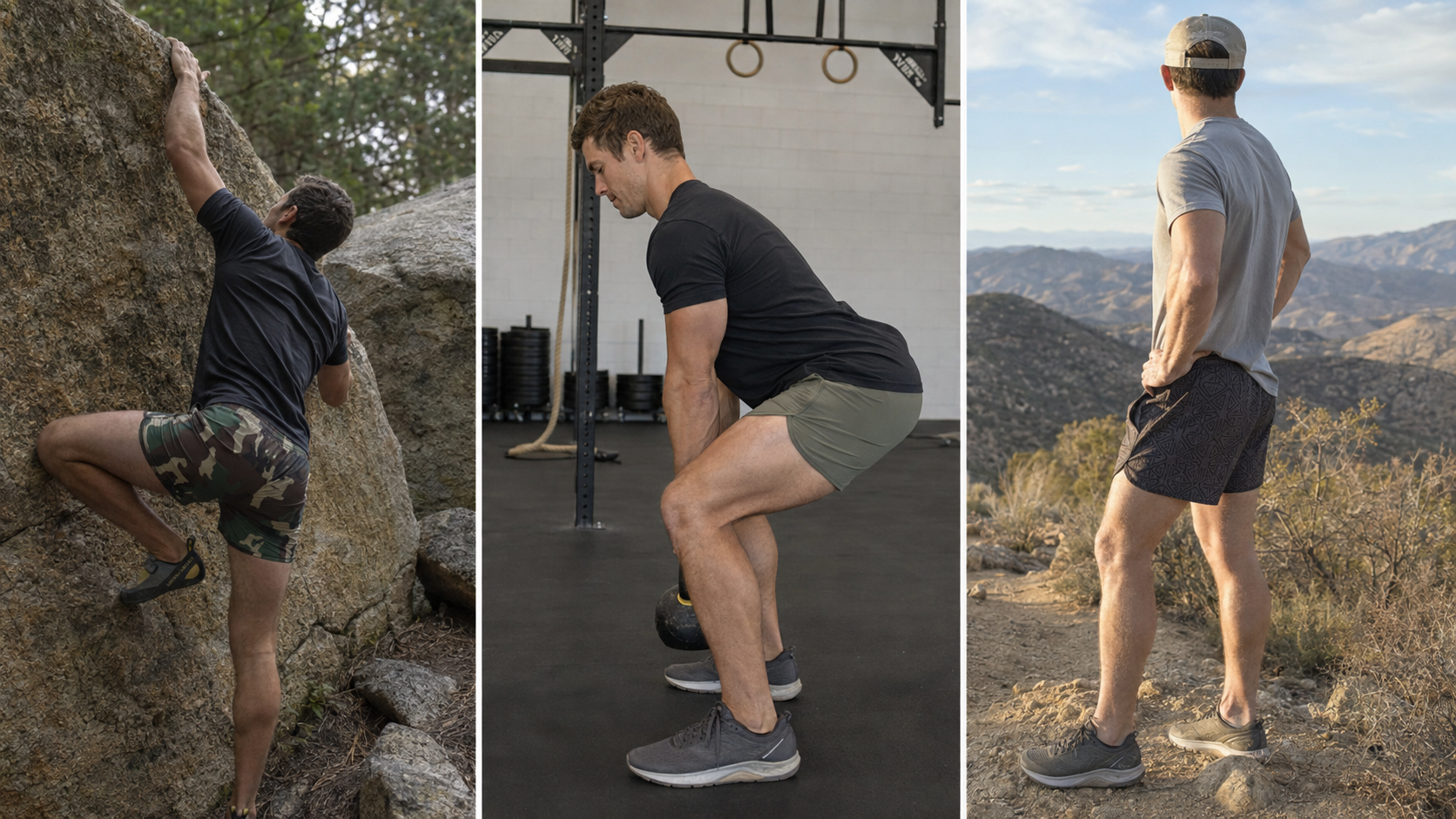
Many performance shorts have become more complicated, adding multiple pockets, heavy panels and layered liners. Silkies take the opposite approach. Their value comes from reducing bulk around the hips and thighs so the wearer can climb, squat, run and move without unnecessary restriction.
That simplicity is especially useful in warm conditions. A shorter inseam and light fabric expose less material to sweat, while curved side hems create room for a wider stride. For buyers, the category can also bridge several collections: training apparel, outdoor recreation, military-inspired lifestyle products and branded team gear.
The Use Case Determines the Right Specification
The same visual silhouette can serve very different users, so buyers should begin with the activity rather than the camouflage pattern. A running or gym program may prioritize low weight, fast drying and unrestricted stretch. A hiking or outdoor-lifestyle program may place more emphasis on abrasion tolerance, secure storage and color coordination with an existing apparel range.
Hot-weather training
For running, conditioning and general fitness, the priorities are breathability, quick moisture release and a waistband that stays stable during repeated movement. A four-way stretch option can improve mobility, but the final fabric weight should be selected through sampling rather than copied from another supplier’s specification.
Climbing and mobility-focused use
A curved hem and clean crotch construction help reduce restriction when the legs open into a high step or deep squat. The sample should be evaluated dynamically—not only laid flat—because inseam comfort and hem movement become clear only when the wearer climbs, lunges or lifts.
Outdoor and team programs
For hiking groups, clubs, gyms and branded merchandise, color consistency, repeat sizing and logo durability can matter as much as the base fabric. Buyers should define whether the shorts will be sold as lightweight outer shorts or paired with a custom liner in a separate production program.
Construction Details Matter More Than Extra Features
Modern silkies do not need to imitate cargo shorts. Their strength is a clean, low-bulk build. The current KANGO bulk style shown here is unlined and uses an elastic waistband, a curved bound hem, a crotch seam designed for movement and a zippered storage pocket. These details keep the product compact while providing a secure place for a key, card or other small essential.
Product reference: View KANGO tactical silkies shorts and ranger panties
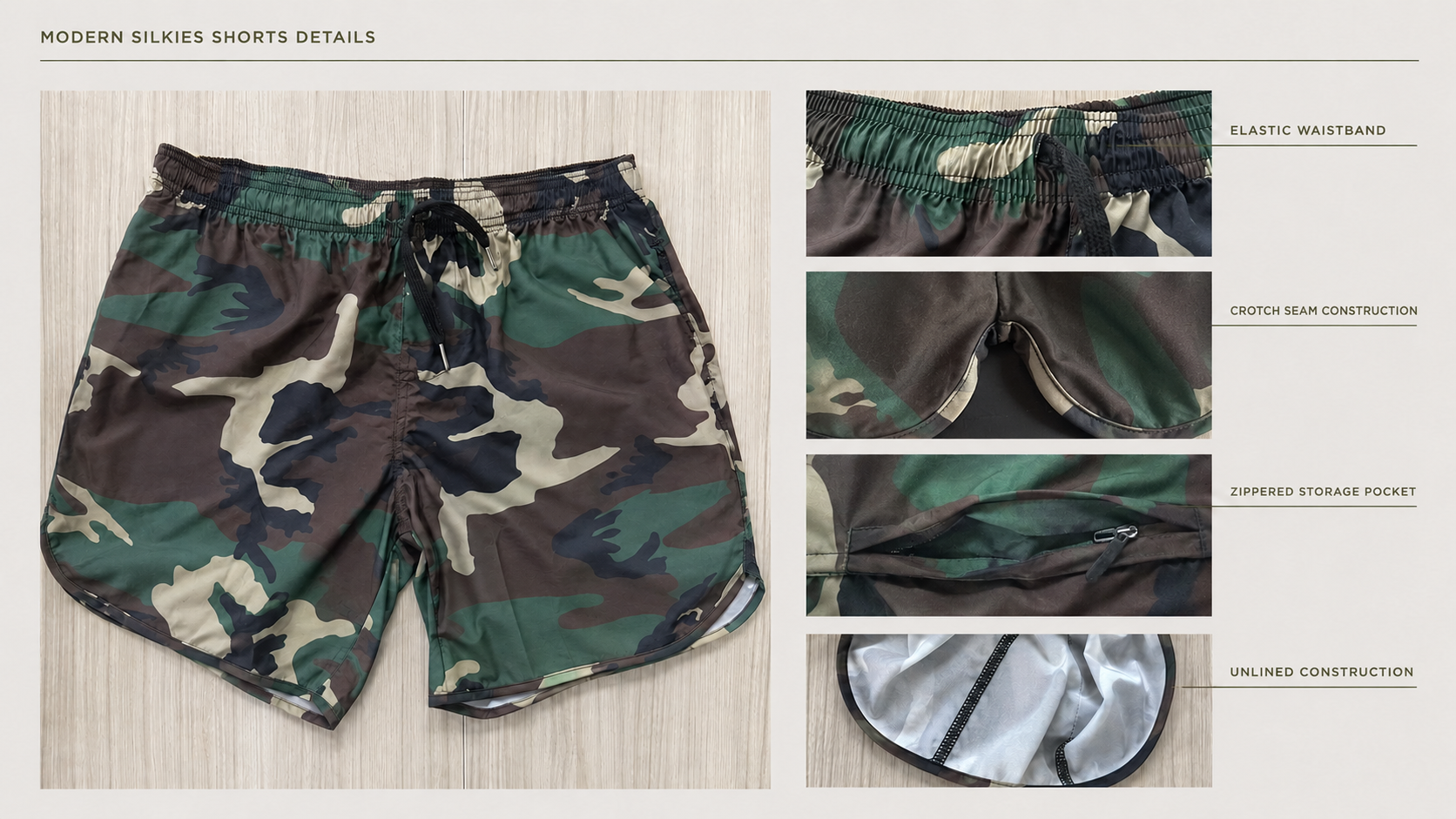
An inner liner can be developed for a customized order. Mesh and regular knitted options are available depending on the desired support, airflow and hand feel. Because the current bulk version is unlined, buyers requesting a liner should treat it as a new custom specification and confirm the material, rise, coverage and attachment method during sampling.
Stock Orders Make Small-Batch Testing Practical
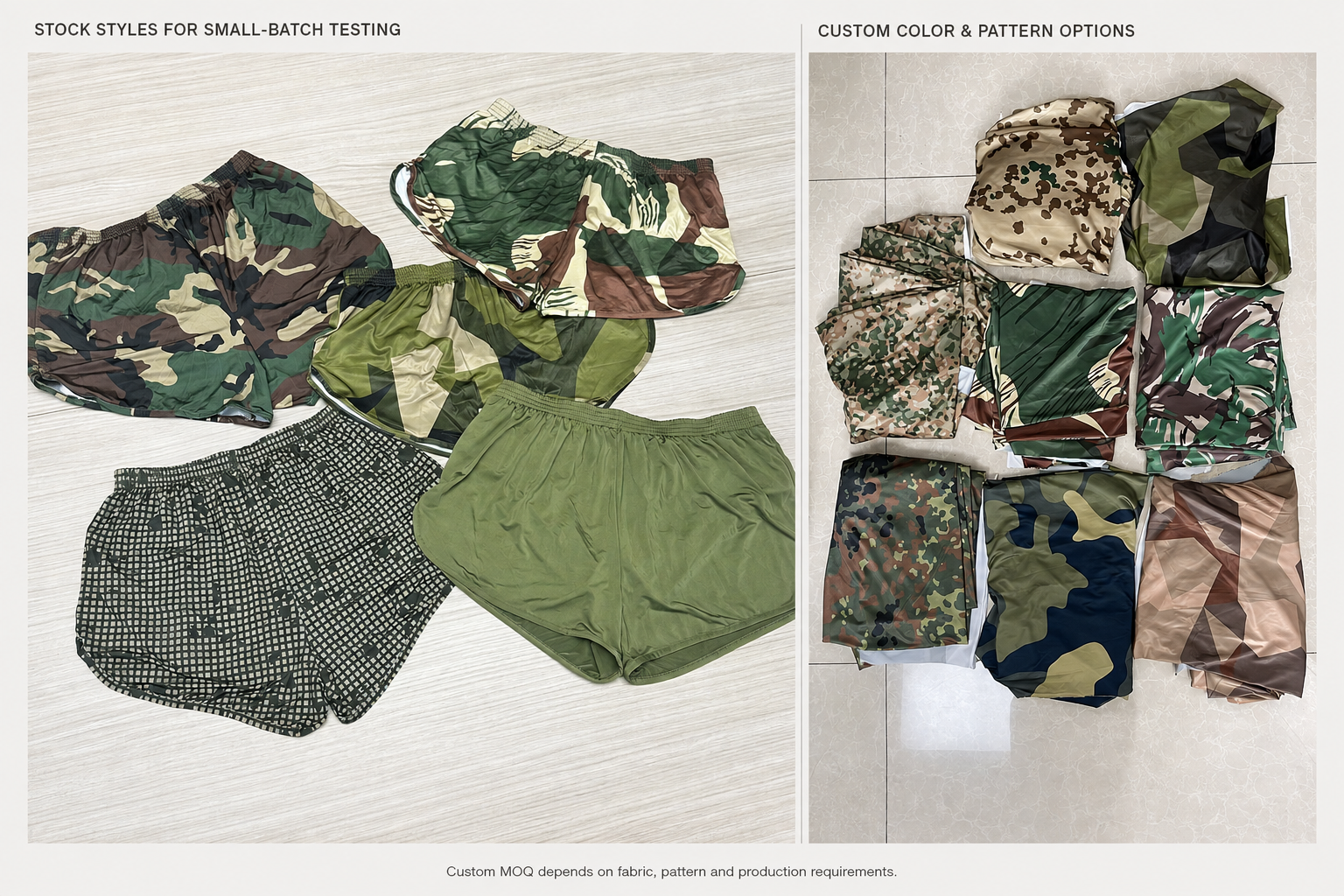
For a buyer who wants to test demand before opening a custom production run, available stock is the most direct starting point. The minimum order quantity for stock styles is 20 pieces. This low entry point supports initial size checks, wear trials, photo shoots, retail feedback and small market tests.
The 20-piece stock MOQ does not normally include customization. Logo application, custom colors, original camouflage artwork, special sizing, labels, packaging, fabric changes and liner development require a separate quotation. The custom MOQ depends on the selected fabric, print method, pattern, trims and production requirements.
Customization Starts With a Clear Product Brief
A custom program can cover solid colors, camouflage patterns, logo placement, labels, packaging, size grading, fabric weight and performance options. Quick-dry and breathable fabrics are available, and four-way stretch fabric weight can be customized. However, “customizable” should not mean leaving every decision open until production. A clear brief makes sampling faster and reduces avoidable revisions.
Define the market and activity
State whether the shorts are intended for running, gym training, hiking, military-inspired lifestyle retail, team use or promotional programs. Also identify the destination market and selling season, since climate and end-user expectations influence fabric and liner decisions.
Specify the silhouette
Provide the target outseam or inseam, waistband width, leg opening, curved-hem shape and size range. If a reference sample is available, measurements should still be recorded rather than relying only on photos.
Choose fabric by performance, not by GSM alone
GSM describes fabric mass per square meter, but it does not fully predict stretch, airflow, opacity, drying speed or durability. The practical method is to compare swatches, confirm the intended fiber and construction, then test one or more sample garments. Fabric weight can be adjusted for a custom order after the buyer evaluates hand feel and performance.
Confirm branding and packaging
Logo technique, artwork size, placement, woven or printed labels, care labels, hangtags, individual bags and carton requirements should be confirmed before pricing. Packaging choices can affect both unit cost and shipment volume.
What to Check on a Pre-production Sample
A useful sample review should reproduce real movement and washing, not only assess appearance. Check whether the waistband recovers after repeated wear; whether the crotch seam remains comfortable during squats and high steps; whether the curved binding lies flat; and whether the zip pocket operates smoothly without adding pressure against the body.
The fabric should also be checked for opacity, colorfastness, shrinkage, print alignment, drying behavior and stretch recovery. If a liner is added, confirm coverage, airflow and seam placement. For branded programs, wash-test the logo and compare labels and packaging against the approved artwork.
From Test Order to Repeatable Product
Silkies shorts look simple, but consistency still depends on controlling fabric, measurements, stitching and trims. A sensible buying path is to begin with stock for market testing, collect wear and size feedback, and then convert successful details into a documented custom specification. That sequence helps a brand avoid overdeveloping features before it understands what customers actually value.
For wholesalers, outdoor brands, gyms and team programs, the opportunity is not just to copy a traditional ranger-panty silhouette. It is to build a focused warm-weather training short with the right balance of mobility, comfort, secure storage and brand identity.
Planning a stock test or a customized silkies-shorts program? Review the product and send your requirements to KANGO with your target use, quantity, size range, fabric preference and branding plan.
Post time: Aug-03-2026