
A tactical uniform is more than a matching top and pair of pants. For importers, distributors, outdoor brands and project buyers, the right uniform must support movement, withstand repeated use and suit the climate in which it will be worn.
Different applications may require very different clothing systems. A combat shirt and tactical pants set may suit active training and warm-to-mild conditions, while a tactical jacket and pants combination can provide more outer coverage in cooler or changeable weather. Before placing a bulk order, buyers should compare garment type, fabric, construction, sizing and customization instead of choosing a uniform based only on its appearanc
PUBLISHING NOTE 1 | Place this cover image immediately after the introduction. It visually introduces the two uniform systems discussed in the article.
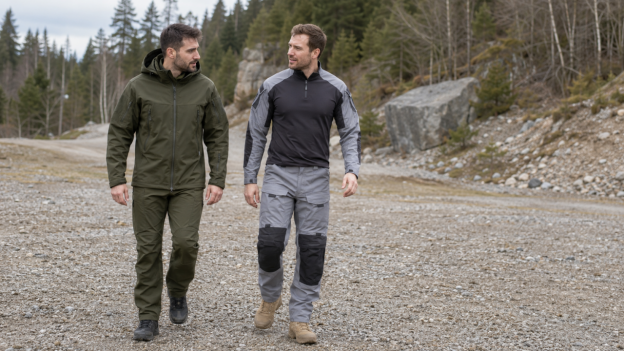
A Tactical Uniform Should Be Treated as a Clothing System
The term “tactical uniform” can refer to several coordinated clothing formats:
- · Combat shirt and tactical pants
- · Tactical jacket and pants
- · Camouflage training uniform
- · Tactical shirt and cargo pants
- · Cold-weather tactical clothing set
- · Custom team or project uniform
Although these products may look similar in photographs, they can differ significantly in fabric weight, stretch, warmth, pocket layout and intended season. Buyers should therefore begin with three questions:
1. Who will wear the uniform?
2. In what climate and activity will it be used?
3. What functions must be confirmed before production?
These questions help prevent a common sourcing problem: ordering a visually suitable product that does not match the actual wearing conditions.
Choose the Right Tactical Uniform Format
Combat Shirt and Tactical Pants
A combat-style shirt and pants set is generally developed around mobility and mixed-fabric construction. The upper garment may use a softer or more flexible fabric through the torso, while more structured material is used on the sleeves and other exposed areas. Tactical pants may include reinforced knees, cargo pockets and adjustable details.
One example is KANGO’s men’s tactical camouflage uniform. Its listed specification combines a 40% cotton and 60% polyester blend in the camouflage sections with a 60% polyester, 35% cotton and 5% Lycra blend in the body section. The listed fabric weight is 220 g/m².
When evaluating this type of tactical uniform, buyers should check:
- · Shoulder and arm mobility
- · Reinforcement at the elbows and knees
- · Pocket position and accessibility
- · Waist and cuff adjustment
- · Compatibility with belts and other equipment
- · Comfort during extended wear
- · Size consistency between the shirt and pants
The approved sample should be tested while standing, kneeling, reaching and bending. A good-looking uniform can still be unsuitable if its panels, pockets or seams restrict movement.
Tactical Jacket and Pants
A tactical jacket and pants set provides a different clothing system. Compared with a combat shirt, a jacket normally offers more outer coverage and may include a hood, higher collar, adjustable cuffs, zipped pockets or a more weather-resistant outer fabric.
This format may be more appropriate for cool-weather training, hiking, field activities, outdoor work and markets that require autumn or winter apparel. However, buyers should not assume that every tactical jacket is fully waterproof or suitable for extreme cold.
Before ordering, distinguish clearly between:
- · Water-resistant and waterproof
- · Wind-resistant and windproof
- · Unlined and fleece-lined
- · Softshell and insulated outerwear
- · Lightweight and cold-weather construction
Buyers can compare more outerwear options in KANGO’s tactical jacket collection.
Compare Fabric and Construction, Not Only Marketing Claims
Cotton-polyester blends are commonly used in tactical clothing because they can balance structure, comfort and ease of care. Stretch fibres may also be added in selected zones to support movement. However, fibre composition alone cannot determine garment performance.
Professional buyers should also confirm:
- · Fabric weight and weave
- · Stretch direction and recovery
- · Shrinkage tolerance
- · Colorfastness
- · Abrasion and tear resistance, when required
- · Water-resistance test method, when claimed
- · Recommended washing method
Claims such as waterproof, flame-resistant or anti-static should be supported by a relevant test method or report when these properties are required for the project. The specification sheet, approved sample and bulk production should use consistent descriptions.
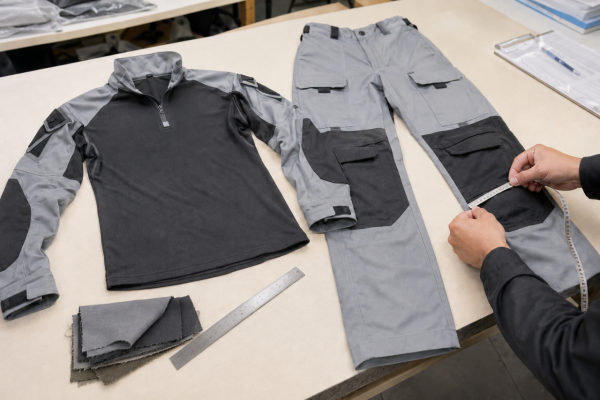
Construction quality is equally important. Inspect the elbows, knees, pocket corners, zipper ends, belt loops, crotch seams, cuffs and waistband adjustment points. Reinforcement should protect high-wear areas without making the garment unnecessarily stiff.
PUBLISHING NOTE 2 | Insert this image directly after the construction section and before the climate section. The measuring action and stacked fabric pieces support the quality-control discussion.
Match the Uniform to the Climate and Layering System
Climate is one of the most important factors in tactical uniform sourcing.
Warm and Humid Conditions
For warm markets, buyers may prioritize lighter fabric, breathable body panels, reduced bulk and easier moisture release. Pocket layout and reinforcement should remain practical without adding excessive weight.
Mild and Changeable Conditions
A medium-weight tactical uniform can offer greater versatility in spring and autumn. The shirt or jacket should allow the wearer to adjust layers as activity levels and weather conditions change.
Cool or Cold Conditions
Cold-weather tactical clothing should be evaluated as part of a layering system. The jacket and pants need enough room for base or insulating layers without restricting movement. Buyers should confirm the lining, fabric construction and weather-resistance level separately instead of relying only on a broad label such as “winter tactical uniform.”
Confirm Sizing for the Target Market
International sizing can vary considerably. A garment marked “L” may fit differently across countries and suppliers, so bulk orders should not rely only on letter sizes.
A complete size chart should include actual garment measurements such as:
- · Chest and shoulder width
- · Sleeve and shirt length
- · Waist and hip
- · Thigh measurement
- · Inseam
- · Leg opening
For tactical jackets, confirm whether the measurements include enough room for additional layers. Testing more than one sample size is more reliable than approving a single sample and scaling the remaining sizes automatically.
Plan Colors, Branding and Customization Before Production
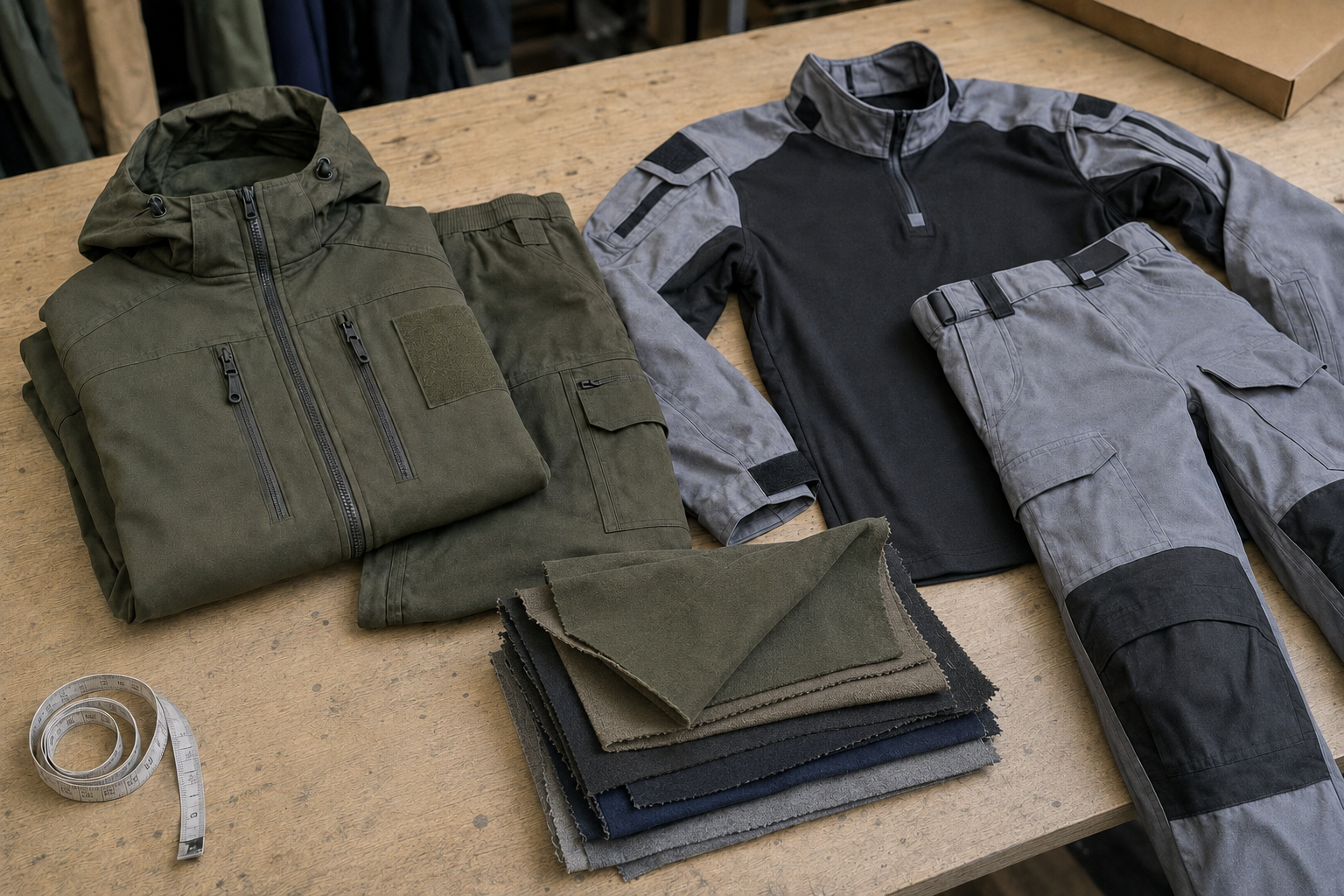
Tactical uniforms may be produced in solid colors, camouflage-style patterns or buyer-supplied designs. To improve production consistency, buyers should provide color references, approved fabric swatches, original pattern files and clear logo-placement instructions.
Customization may include:
- · Solid colors or original camouflage patterns
- · Embroidery and removable patches
- · Woven labels and care labels
- · Size markings
- · Individual pack
- · Carton information
Recognizable branded camouflage patterns, logos and official insignia may be protected. Buyers should use original or properly authorized designs rather than copying an existing brand or organization.
PUBLISHING NOTE 3 | Insert this image directly after the customization section and before the bulk-order checklist. The layered fabric stack and two uniform styles reinforce the color-and-material approval process.
Bulk Tactical Uniform Order Checklist
Before confirming an order, buyers should document:
1. Final garment style
2. Intended climate and use
3. Fabric composition and weight
4. Color or pattern reference
5. Size chart and measurement tolerances
6. Reinforced areas
7. Pocket and closure details
8. Logo, label and patch placement
9. Sample approval process
10. Quantity and size breakdown
11. Packaging requirements
12. Production lead time
13. Inspection standard
14. Defective-item handling process
A detailed specification sheet helps the supplier keep the bulk order consistent with the approved sample and reduces misunderstandings during production.
Choosing a Tactical Uniform Supplier
The best tactical uniform is not necessarily the one with the longest feature list. It is the product whose garment type, material, fit and customization options match the intended market.
A combat shirt and tactical pants set may be more suitable for active training, while a tactical jacket and pants set may provide greater coverage in cooler outdoor conditions. Buyers should evaluate these systems separately rather than treating all tactical clothing as the same product.
Explore KANGO’s tactical suit collection or contact the KANGO team to discuss materials, sizing, colors, packaging and custom tactical uniform requirements.
Frequently Asked Questions
What is the difference between a combat uniform and a tactical jacket set?
A combat uniform normally consists of a combat-style shirt and tactical pants designed around movement and mixed-fabric construction. A tactical jacket set provides more outer coverage and may be more suitable for cooler or changeable weather.
Can tactical uniforms be customized?
Colors, original patterns, logos, patches, labels and packaging may be customized depending on the selected product and order requirements. Final specifications should be confirmed through an approved sample.
What information should buyers provide for a quotation?
Buyers should provide the preferred uniform type, quantity, size breakdown, target market, fabric requirement, colors, customization details, packaging and destination country.
Should a sample be approved before bulk production?
Yes. A sample allows the buyer to check fabric, workmanship, fit, color and functional details before confirming the bulk order.
Post time: Jul-23-2026