
Woobie Hoodie Guide: Why It Works for Camping, Outdoor Work and Cold Weather
A good outdoor layer does not always need to be heavy.
That is one reason the woobie hoodie has become popular with campers, outdoor workers, travelers and anyone looking for a warm layer that is easy to wear and easy to pack.
Its appeal is simple: it combines the soft, quilted feel associated with a traditional poncho liner with the everyday convenience of a hoodie or lightweight jacket.
And unlike a bulky winter coat, a woobie hoodie is designed to be practical when temperatures change throughout the day.
So what exactly makes this type of hoodie different, and should you choose a pullover or a zip-up version?
Let’s take a closer look.
What Is a Woobie Hoodie?
The modern woobie hoodie takes inspiration from the lightweight quilted poncho liners that have long been used as portable insulation.
Instead of carrying that insulated material only as a blanket or liner, the same basic idea is turned into a wearable layer.
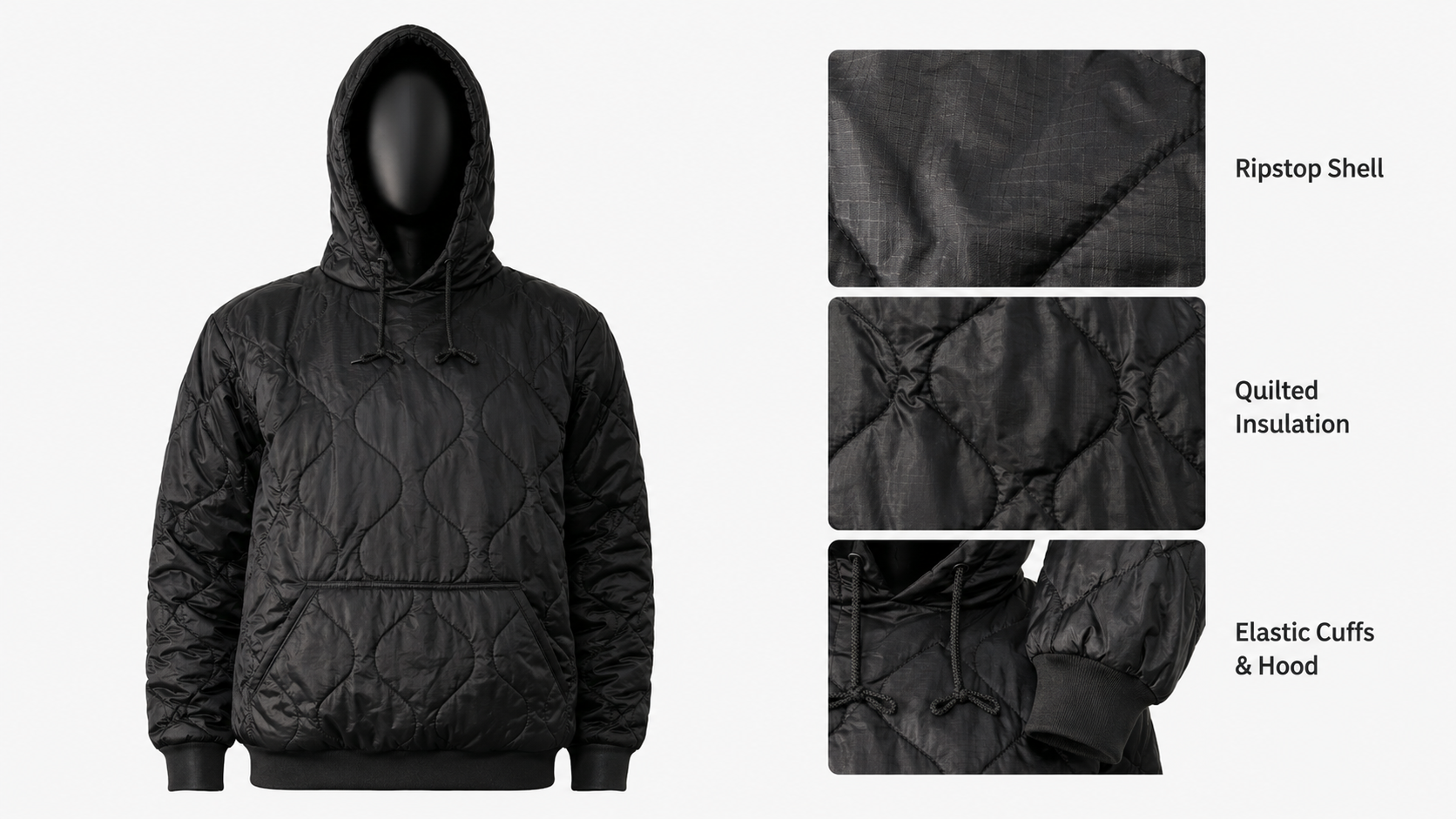
The result is usually a hooded garment with a lightweight shell, quilted insulation and a relaxed construction that works well over a T-shirt, base layer or other clothing.
A typical woobie hoodie focuses on four things:
warmth, low weight, comfort and packability.
That combination is what separates it from many conventional sweatshirts and heavier insulated jackets.
Why Are Woobie Hoodies So Popular?
When buyers talk about woobie hoodies, several themes appear again and again: warmth, comfort, low weight and easy layering.
These are also the areas worth paying attention to when choosing one.
Warm Without Too Much Bulk
One of the biggest advantages of a woobie hoodie is the balance between warmth and weight.
Heavy winter jackets can provide more insulation, but they can also feel restrictive when you are working, setting up camp, driving or moving between indoor and outdoor environments.
A quilted woobie hoodie takes a different approach.
The insulated construction helps retain body heat while keeping the garment relatively light and flexible.
That makes it particularly useful during cool mornings, chilly evenings or transitional weather when a full winter coat may be more than you need.
It is important, however, to treat a woobie hoodie as a versatile insulating layer rather than extreme-cold-weather equipment. How warm it feels will depend on temperature, wind, activity level and what you wear underneath it.
Comfortable for Long Hours Outdoors
Comfort is another reason people keep reaching for this type of jacket.
A lightweight outer fabric, soft insulated construction and relaxed fit can make a woobie hoodie comfortable for extended wear—whether you are sitting around a campsite, working outdoors or simply running errands on a cold day.
Elastic or ribbed cuffs also matter more than they may seem.
A closer-fitting cuff helps reduce cold air entering through the sleeves while still allowing natural movement.
The same applies to the hood and lower hem. Small construction details can make a noticeable difference when the wind picks up.
Lightweight and Easy to Pack
Outdoor clothing often has to do more than keep you warm.
You also have to carry it.
That is where a lightweight quilted hoodie has an advantage over many bulky coats. It can be folded or rolled into a backpack, travel bag or vehicle kit without taking up as much space.
For camping and travel, this makes it especially useful as a layer you can pull out when temperatures drop and pack away again when the weather warms up.
Easy to Use as a Layer
A woobie hoodie does not have to do everything on its own.
In fact, one of the best ways to use it is as part of a simple layering system.
In milder weather, it can be worn over a T-shirt or base layer. When conditions become colder or wetter, it can sit underneath a more protective outer shell.
This flexibility makes it useful across a wider range of conditions than a garment designed for only one temperature range.
Pullover vs. Zip-Up Woobie Hoodie: Which Should You Choose?
Woobie hoodies generally come in several constructions, but two of the most practical choices are pullover and full-zip styles.
Neither is automatically better. The right choice depends on how the garment will be used.
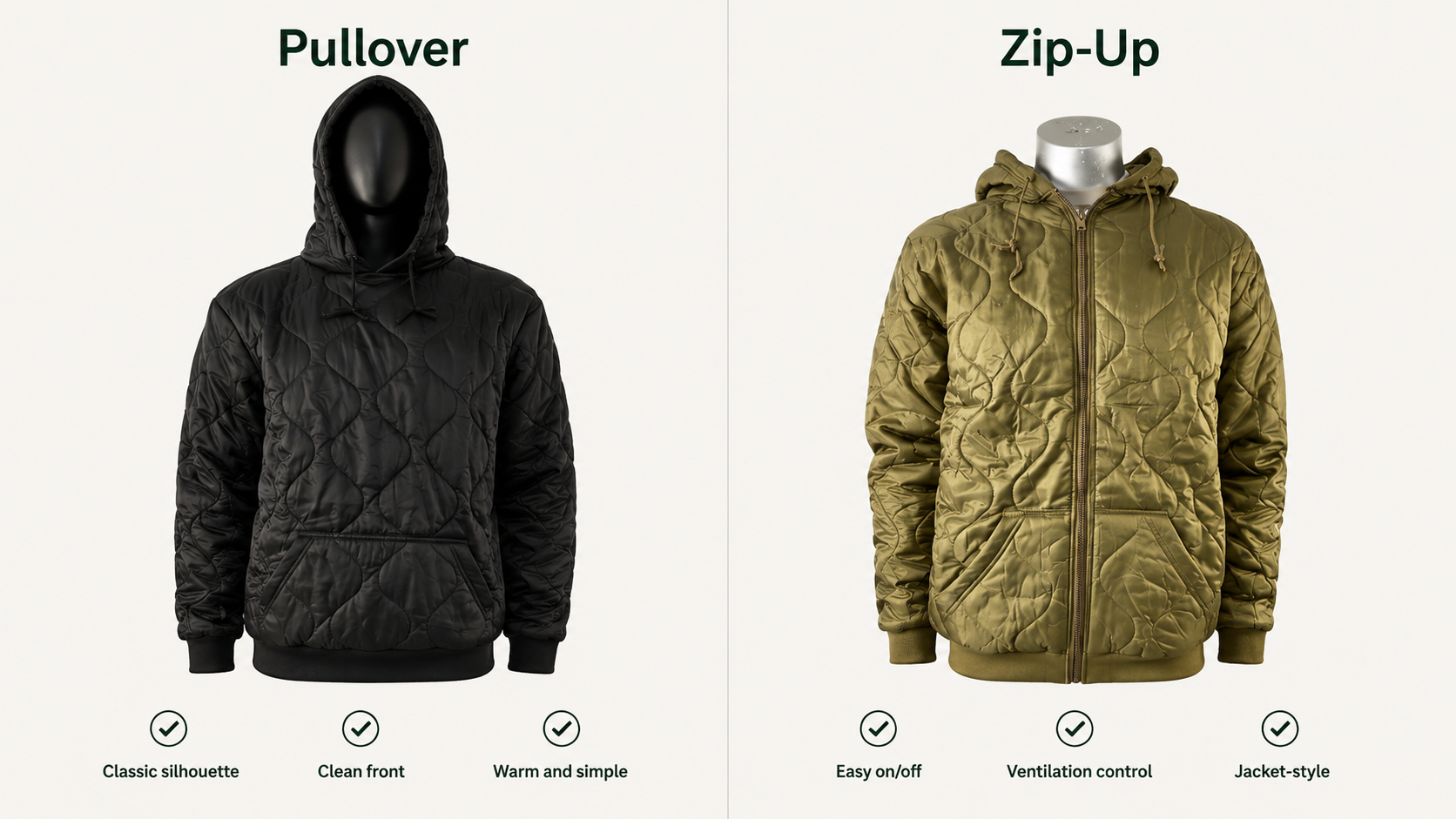
Pullover Woobie Hoodie
A pullover keeps the front construction simple.
With no full-length zipper dividing the front, it provides the classic woobie hoodie look and works well as a straightforward insulating layer.
A kangaroo-style front pocket also gives the garment a familiar hoodie feel.
A pullover may be a good choice for:
- · Camping and casual outdoor use
- · Cool-weather layering
- · Buyers who prefer a simple front construction
- · Markets looking for a traditional hoodie-style silhouette
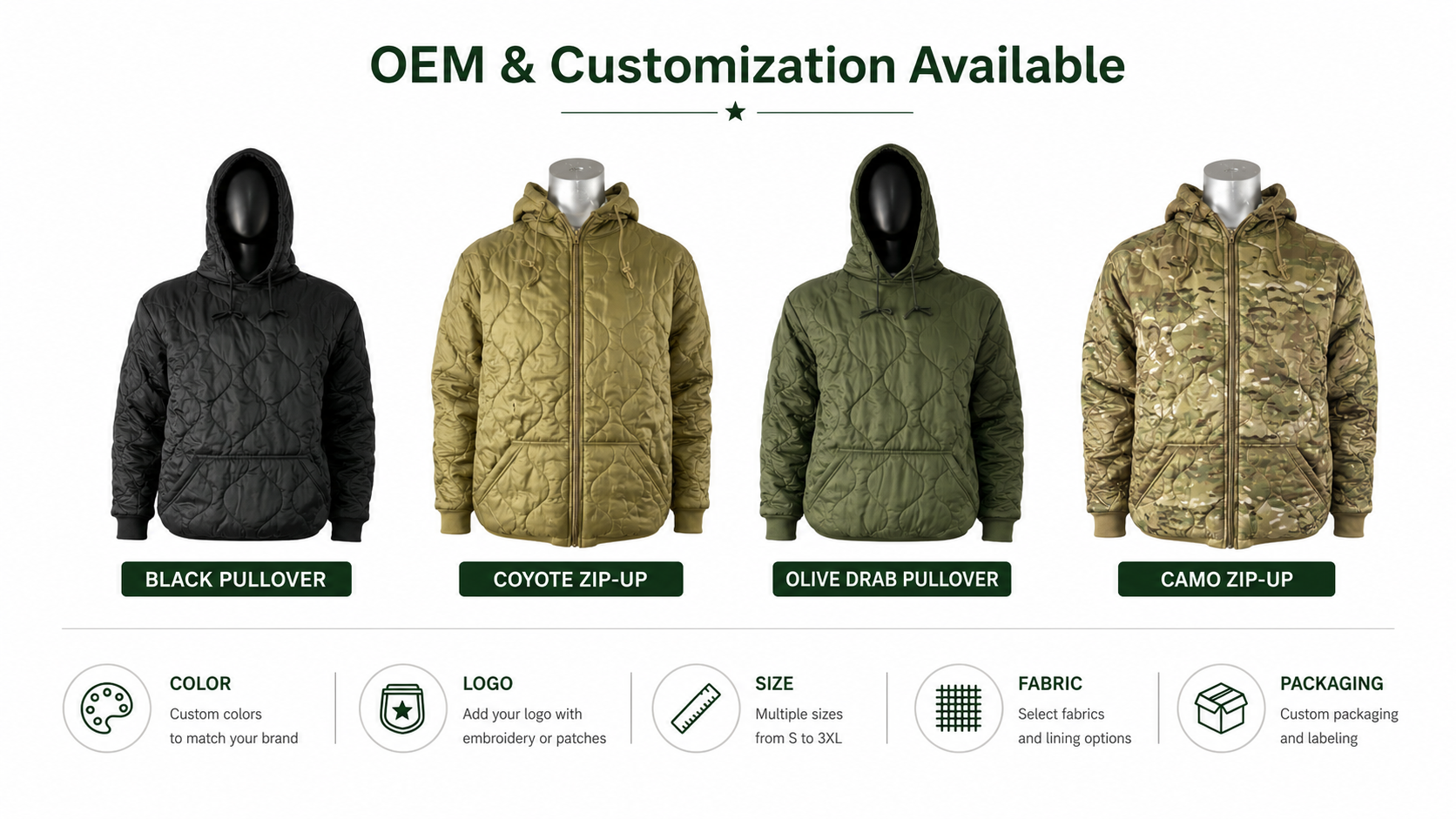
You can view our Black Pullover Woobie Hoodie for an example of this construction.
Zip-Up Woobie Hoodie
A full-length zipper makes temperature management easier.
When you move indoors, become more active or the weather warms up, the front can be opened without removing the entire garment.
The result also looks slightly closer to a conventional insulated jacket, which can make the style easier to use across outdoor and everyday markets.
A zip-up version may be better for:
- · Frequent on-and-off wear
- · Changing temperatures
- · Travel and everyday use
- · Buyers looking for a jacket-style appearance
See our Coyote Zip-Up Woobie Hoodie for this type of construction.
What Should You Look for When Choosing a Woobie Hoodie?
Not all quilted hoodies are made the same.
For individual buyers, details affect comfort and durability. For wholesalers and outdoor brands, they can also affect repeat orders, returns and customer satisfaction.
Here are several areas worth checking.
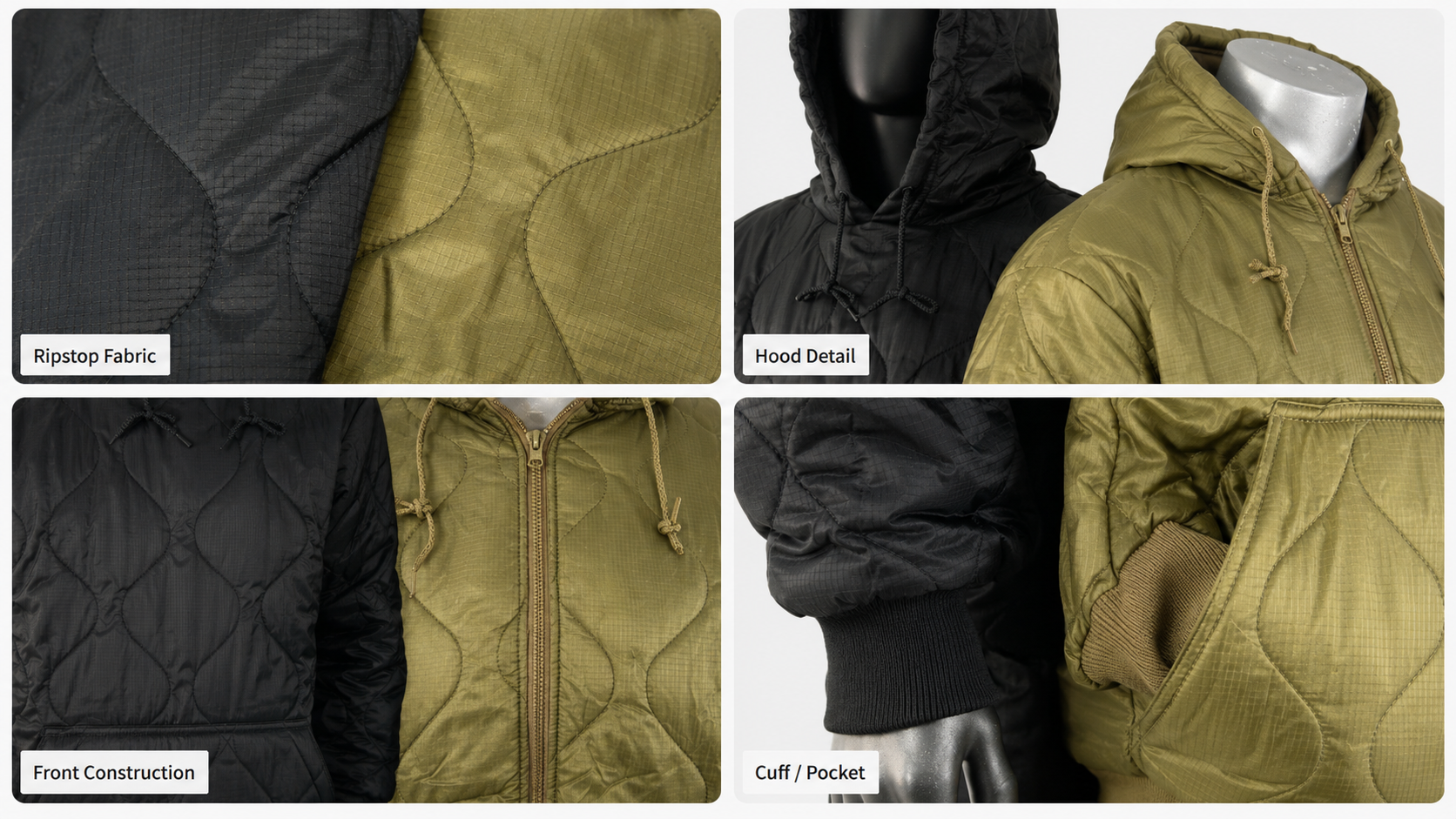
1. Ripstop Fabric
A ripstop shell uses a reinforced grid structure in the fabric.
That does not mean the material is impossible to damage, but the construction is commonly used in outdoor equipment because it provides a good balance between light weight and practical durability.
The visible grid texture is also one of the recognizable details of many woobie-style garments.
2. Quilting and Stitching
Quilting keeps the insulating material distributed throughout the garment.
Consistent stitching is especially important around areas that receive repeated movement and stress, including the shoulders, cuffs, pockets, hood and waist.
For wholesale sourcing, it is worth looking beyond the overall appearance of the jacket and checking these smaller construction areas closely.
3. Cuffs, Hood and Pockets
Details that seem minor in a product photo can make a large difference in actual use.
Elastic or ribbed cuffs help provide a closer fit around the wrist. A hood adds additional protection when temperatures drop, while practical pockets give the wearer somewhere to warm their hands or carry small items.
On zip-up styles, zipper construction should also be checked for smooth operation and consistent stitching.
4. Size and Fit
Sizing deserves more attention than it often gets.
Some customers prefer a closer everyday fit, while others intentionally choose a roomier size so they can wear layers underneath.
Body shape, garment length and waistband construction can also change how the same labeled size feels from one person to another.
For retail buyers, the safest approach is to check the actual garment measurements rather than relying only on S, M, L or XL labels.
For wholesale buyers, sizing can also be adjusted according to the target market. A size specification intended for North American customers, for example, may differ from one developed for another region.
Where Can You Wear a Woobie Hoodie?
Although the design has military roots, a woobie hoodie does not have to be limited to tactical use.
Its combination of insulation and portability makes it useful in a variety of everyday outdoor situations.
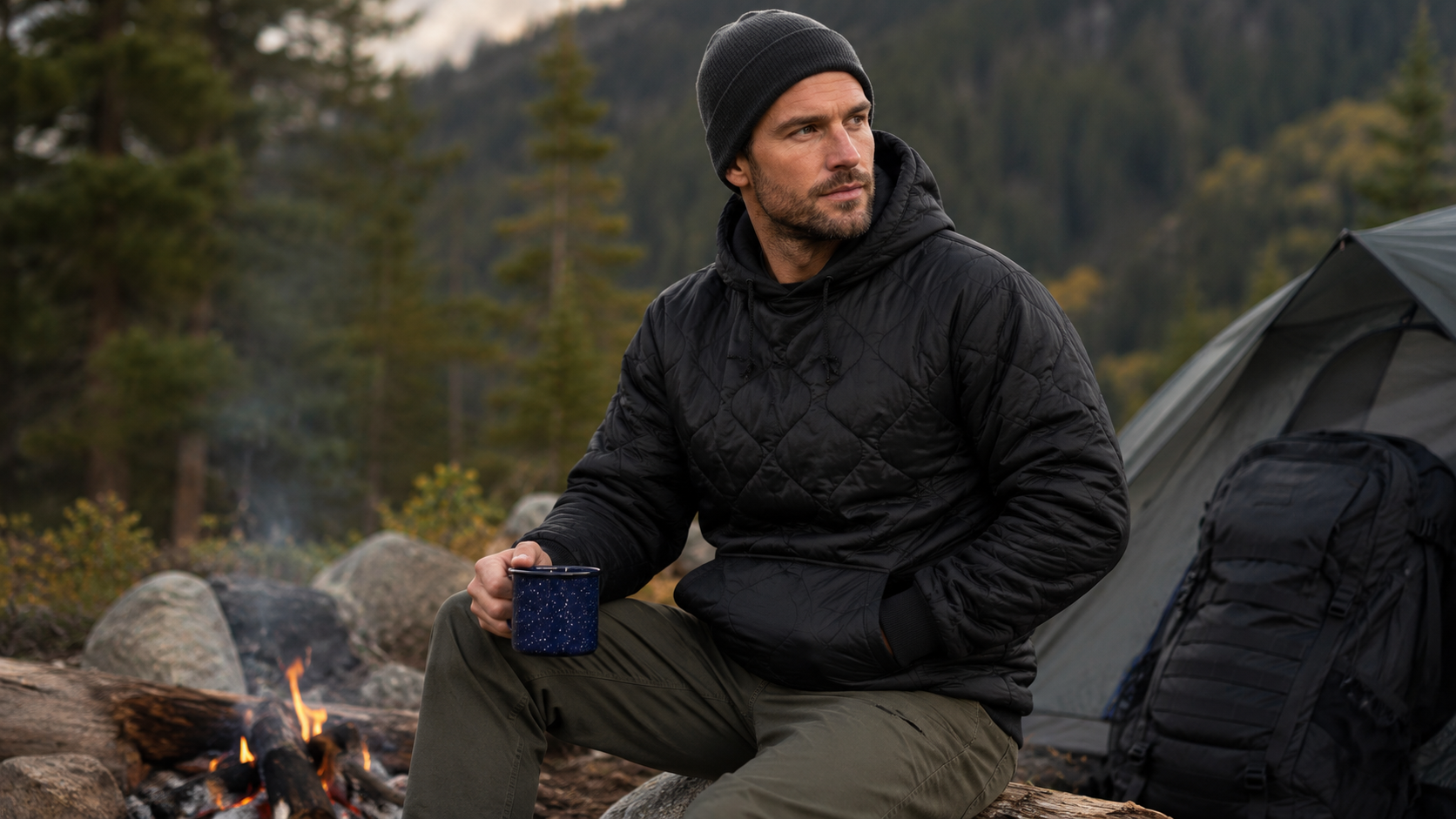
Camping
Camping is one of the most natural applications.
Temperatures often drop quickly after sunset and remain cool during the early morning. A lightweight insulated hoodie can be kept close to camp and added when needed without taking up the space of a heavy winter jacket.
Hiking and Travel
For trips where packing space matters, a lighter insulating layer can be easier to carry.
It can stay in a backpack while you are moving and come out during rest stops, cool evenings or changing weather.
Outdoor Work
People working in farms, warehouses, workshops, campsites or other cooler environments may also prefer clothing that provides warmth without making movement difficult.
Everyday Cold-Weather Wear
Not every use needs to be technical.
A simple black, olive or coyote woobie hoodie can also work as an everyday casual layer for commuting, driving or weekend activities.
Is a Woobie Hoodie Waterproof?
This is an important distinction.
A water-repellent or water-resistant shell is not the same as a waterproof rain jacket.
A ripstop nylon outer layer may help with light moisture, wind and brief exposure to drizzle depending on the fabric and treatment used, but a woobie hoodie should not automatically be treated as a replacement for dedicated waterproof outerwear.
For prolonged rain, it is better to use a proper waterproof shell over the insulating layer.
This is another reason the woobie hoodie works well within a layering system.
How Should You Care for a Woobie Hoodie?
Care requirements can vary depending on the shell fabric, insulation and construction, so always follow the care label supplied with the garment.
In general, gentle washing and avoiding unnecessary high heat can help protect lightweight quilted fabrics and insulation.
Before placing any insulated garment in a dryer, check whether tumble drying is recommended for that specific material.
For wholesale orders, customized care labels can also be produced according to the selected fabric and filling specifications.
Custom Woobie Hoodies for Wholesale Buyers
For brands, distributors and outdoor-equipment buyers, choosing between a pullover and zip-up style is only the beginning.
Woobie hoodies can be developed around different target markets and price levels.
Depending on the project, customization may include:
Color and camouflage pattern — black, coyote, olive drab and other colors can be developed according to the collection.
Logo and branding — patches, embroidery, labels and other branding options can be discussed according to the design.
Sizing — size specifications can be adjusted for different markets and customer groups.
Fabric and insulation — shell material, lining and filling specifications can be selected according to the required balance between warmth, weight and cost.
Packaging — individual packaging, labels and other presentation requirements can be developed for wholesale programs.
Pullover and full-zip constructions can also be selected according to the intended customer and use case.
Frequently Asked Questions
Are woobie hoodies warm?
Yes, woobie hoodies are designed to provide lightweight insulation and are well suited to cool-weather use. Actual warmth depends on the fabric, insulation, fit, weather conditions and layers worn underneath.
Are woobie hoodies waterproof?
Not necessarily. Some styles use water-repellent or water-resistant outer fabrics, but this should not be confused with fully waterproof rainwear.
Should a woobie hoodie fit loose?
That depends on how you plan to wear it. A slightly relaxed fit can leave room for a base layer or sweatshirt underneath, while a closer fit may be preferred for everyday casual wear. Always check actual garment measurements before ordering.
Is a pullover or zip-up woobie hoodie better?
Choose a pullover if you prefer a simple construction and classic hoodie feel. Choose a zip-up if easy removal and adjustable ventilation are more important.
Can woobie hoodies be customized for wholesale orders?
Yes. Depending on order requirements, options can include color, camouflage pattern, sizing, fabric, insulation, logos, labels and packaging.
Find the Right Woobie Hoodie for Your Market
The popularity of the woobie hoodie comes from a simple idea: you do not always need a heavy jacket to stay comfortable outdoors.
For camping, travel, outdoor work and everyday cold-weather use, a lightweight quilted layer offers a practical balance of warmth, comfort and portability.
The right version depends on how it will be used.
Choose a Pullover Woobie Hoodie for a clean, classic construction, or explore our Zip-Up Woobie Hoodie for easier on-and-off wear and greater ventilation control.
For wholesale orders, custom colors, sizing, branding, fabric specifications and packaging can be discussed according to your market requirements.
Post time: Aug-10-2026